
SIPLACE feeder compatibility depends on the feeder family, machine interface, tape handling requirements, and supported configuration. Nozzle compatibility depends on the placement head, nozzle holder, component contact area, and approved handling method. Tape width or a similar-looking nozzle tip is only one part of either decision.
Feeders and nozzles meet at the pickup point, but they solve different problems. The feeder presents a component in a repeatable position. The nozzle contacts and holds that component. A replacement order works better when those two choices are checked separately and then assessed together against the production job.
An 8 mm feeder description leaves important details open
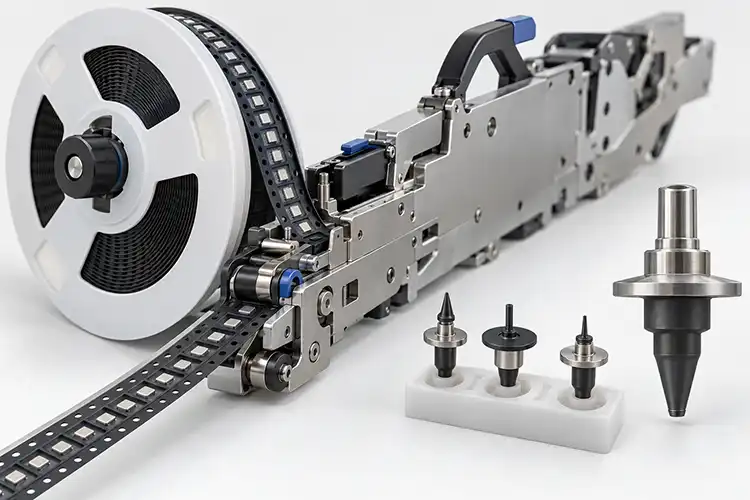
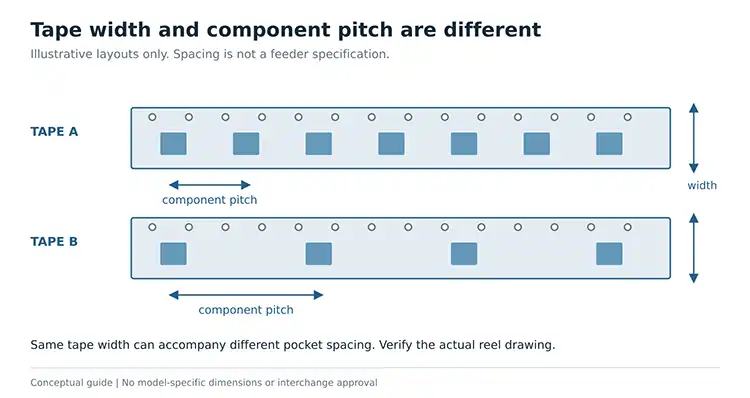
Tape width describes the carrier tape across its width. Component pitch describes the spacing between successive component pockets. A purchase request should record both, along with the feeder's complete identification and the machine interface.
Do not infer pitch from package size alone. Confirm the tape information for the actual reel or component lot. Also check pocket depth, tape guidance, cover tape handling, and any restrictions stated for the feeder configuration.
If a feeder is being purchased as a replacement, compare it with the working specification for that machine. If it is being added for a new component, the inquiry also needs the packaging drawing and the intended production setup. These requests start from different evidence.
Check the rear interface as carefully as the tape path
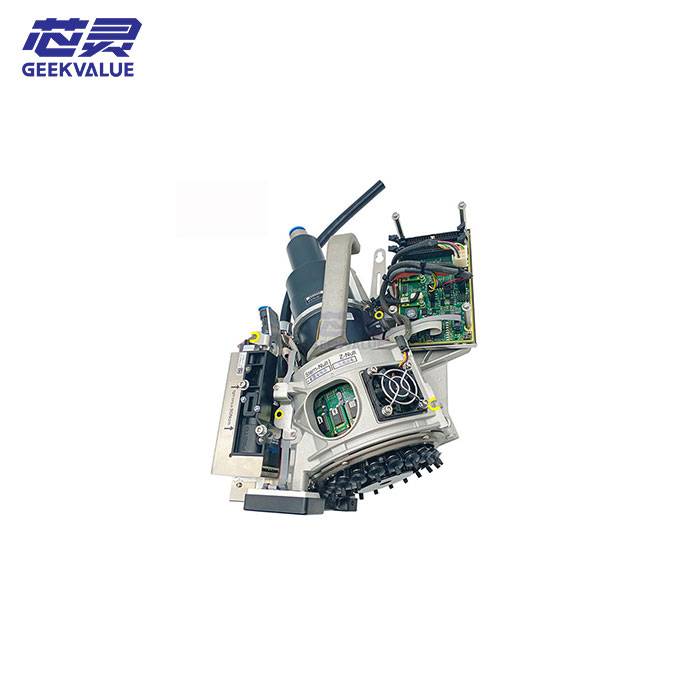
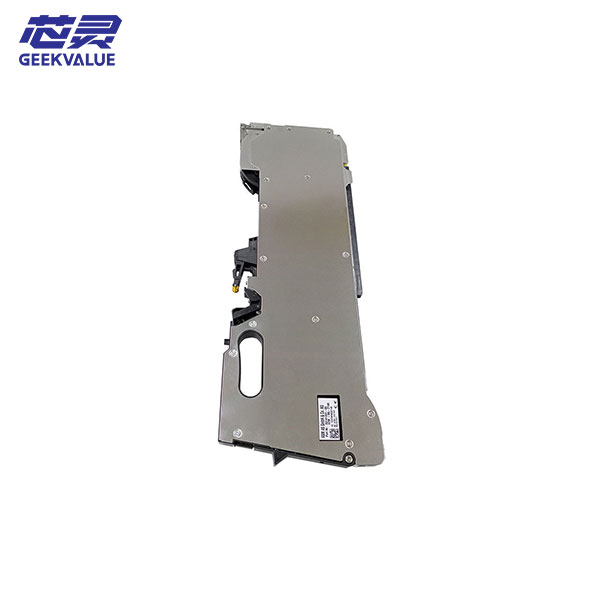
A clear photograph of the pickup area helps identify the feeder's tape arrangement. Rear and underside views reveal mounting features, electrical contacts, locking mechanisms, and interface details that a front view can hide.
Copy the feeder family and revision from its label. Similar external dimensions do not establish that a feeder communicates correctly with a machine or fits its feeder table. Where software support or configuration is relevant, obtain confirmation for the actual machine rather than relying on a broad family name in a listing.
When a pickup fault follows the feeder
Suppose one component repeatedly fails to pick while other components run normally. That observation narrows the investigation, but it does not yet identify a failed feeder. Tape condition, pickup coordinates, pitch settings, and the nozzle's contact with the component can all affect the result.
A technician may compare behavior using an approved known-good feeder or another controlled check under the service procedure. Record what changed and what stayed constant. If several settings and parts change at once, a successful run gives little information about which correction mattered.
For a replacement inquiry, send the observed symptom separately from the identity information. “Intermittent feed advance with this tape” is more informative than “bad feeder,” particularly when the unit has not yet been evaluated.
Choose a nozzle around the head and the component
Start with the supported nozzle family for the installed head. Then check the component drawing, available pickup surface, vacuum contact area, package height, and neighboring clearances. The nozzle holder, retention arrangement, and any required identification or setup must also agree with the machine requirements.
An opening that looks close in diameter can still contact a different part of the package. Raised features, exposed structures, curved surfaces, and irregular bodies can make a simple size comparison inadequate. Preserve the component manufacturer's handling restrictions when selecting the pickup method.
ASMPT provides a SIPLACE nozzle library organized around component shapes, with technical assistance for unusual components. A machine's approved component and nozzle documentation is a better starting point than guessing from the tip shape of an existing nozzle.
Photograph the shank as well as the tip
For a worn or unidentified nozzle, take a full side view, a clear tip view, and a close-up of the holder interface. Capture readable markings and show any damage separately. If measurements are required, identify the reference surfaces and avoid contact that could damage the tip.
A worn tip may no longer represent the original dimensions. Treat it as evidence of the installed item, while checking nominal dimensions against documentation or an unworn confirmed reference.
Keep feeder faults and nozzle faults distinct
The following observations help organize a request. They are investigation leads, not a diagnostic verdict.
Observation | Information to collect |
Pocket position varies at pickup | Tape pitch, loading method, feed behavior, pickup position |
Component reaches pickup but does not stay on the nozzle | Contact surface, nozzle condition, vacuum observations, package details |
Feeder is not recognized | Feeder identity, interface condition, machine messages, supported configuration |
Failures appear with one component lot | Packaging drawing, tape condition, lot changes, job settings |
Nozzle cannot seat correctly | Head identity, nozzle family, holder geometry, contamination or damage |
This distinction matters for purchasing. Replacing a feeder will not resolve an unsuitable pickup surface, and buying a different nozzle will not repair a damaged feeder interface.
Keep feeder width separate from feeder capacity
The width printed in a feeder description concerns the tape or feeder arrangement specified for that item. It should not be treated as the number of machine positions occupied. Wider feeders, multi-lane arrangements, and special modules can make a simple feeder count misleading.
For a line expansion, check the machine's documented position accounting as well as the compatibility of each feeder. The SIPLACE X feeder positions and BOM mapping guide addresses that separate planning task. A purchase can satisfy the correct tape format and still leave the machine short of available feeder space.
An illustrative tape check
Consider a hypothetical job with two reels that both use 8 mm carrier tape. One packaging drawing specifies a 2 mm component pitch and the other specifies 4 mm. Both records contain the same tape width, while the indexing requirement differs. This example explains the distinction; it does not establish the supported pitch range of any particular SIPLACE feeder.
Send the packaging information for both reels when checking the feeder requirement. If a supported machine configuration determines pitch automatically, verify that feature against the installed software and feeder arrangement. Do not use the presence of automation as a reason to omit the reel data from a new-component evaluation.
Check adapters as part of the configuration
An adapter has its own identity and defined function. Its presence does not make every feeder or special module interchangeable. Record the adapter part number, machine interface, and supported module arrangement together.
For example, the SIPLACE X-Series feeder adapter listing for 00141305 gives a specific item to reference in an inquiry. A buyer should still confirm whether that adapter belongs to the intended module and machine setup. Avoid ordering an adapter simply because it appears beside a feeder in a photograph.
A nozzle must suit both its holder and its pickup task
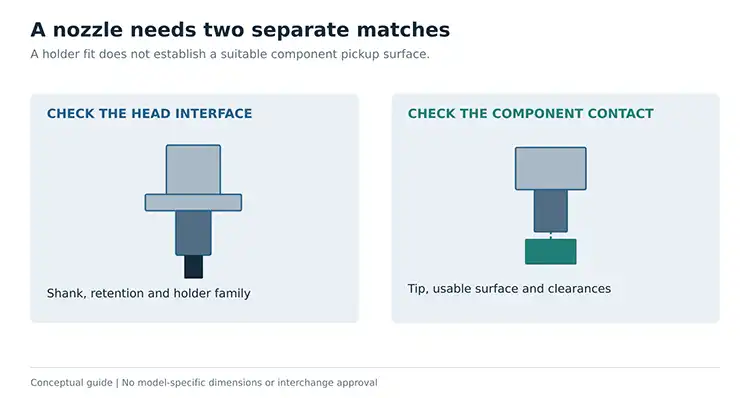
There are two separate matches to establish. The shank and retention features connect the nozzle to the head tooling system. The tip meets the component. Passing one check does not settle the other.
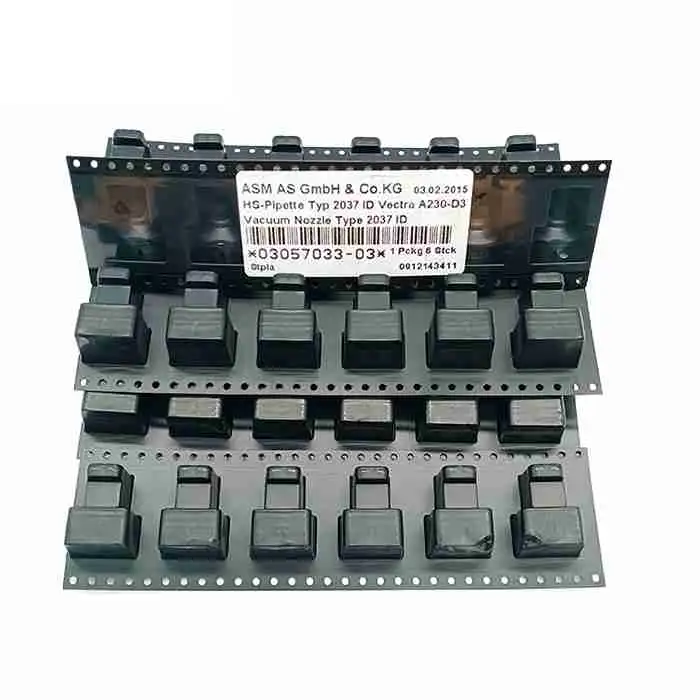
The SIPLACE 4107 and 6107 nozzle listing for 03102344 is an example of a listing that provides both a nozzle designation and a part-number reference. When comparing an installed nozzle with a candidate, retain both identifiers and check the complete version against the approved setup. Do not infer a substitute from an adjacent code in the same number series.
For the component side, examine where the tip can make stable contact without touching prohibited surfaces. Include the component drawing and the actual packaging orientation. A cavity, raised center, sloped top, or delicate feature can change the available pickup area even when body dimensions resemble a previously qualified package.
Qualify the purchase against the intended production job
A sensible acceptance plan separates feeder operation from component handling. First establish correct recognition and tape presentation under the machine procedure. Then assess pickup and placement with the intended component, head, nozzle, and approved job settings.
Record the component and tape lot, feeder identity, nozzle type, machine configuration, and observations. If a problem appears only with one reel, preserve the reel information. If it follows one feeder across an approved comparison, preserve that result as well. These records are more useful than a general statement that the line ran for a short period.
For an additional purchase rather than an urgent replacement, include nozzle quantities, magazine arrangements, and feeder staging requirements in the order review. The ASM SIPLACE feeder range helps organize feeder inquiries, while the SMT nozzle range keeps tooling selection tied to the requested head and component.
Agree on the supplied scope before dispatch
A feeder quotation should identify the exact unit, revision where available, condition, and included accessories. For used equipment, ask what the test actually covered: identification, feed operation, tape handling, and any machine or fixture involved. A short unloaded movement video answers fewer questions than a documented functional check with representative tape.
Nozzle orders need the exact type and quantity. Confirm whether the quotation includes loose nozzles, holders, or a magazine. A photographed set should not be assumed to include every item visible unless the supply description says so.
We can review a feeder or nozzle request more precisely when it includes the machine and head information alongside the reel or component drawing. For a new package, tell us which part of the pickup decision remains unresolved rather than sending only a nozzle photograph.
Can the same nozzle handle every component of one package size
No. Similar body dimensions do not establish identical top surfaces, mass, height, or handling limits. Check the exact component and the approved head and nozzle combination.
Should a replacement feeder be accepted because it fits the table
Mechanical fit is an initial check. Recognition, supported operation, tape presentation, and condition still need confirmation. Complete the machine's prescribed setup and validation before returning it to production.