
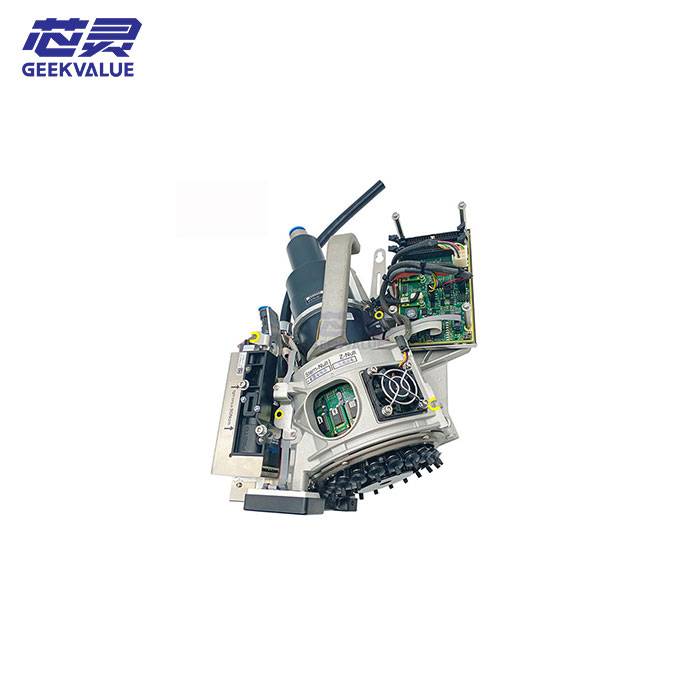
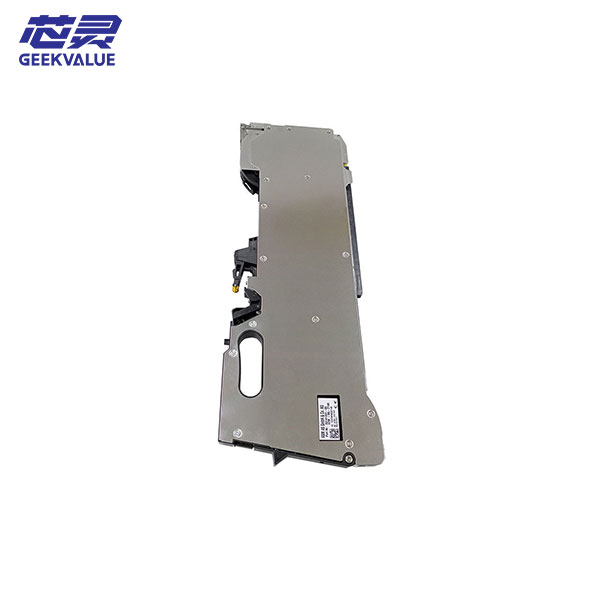
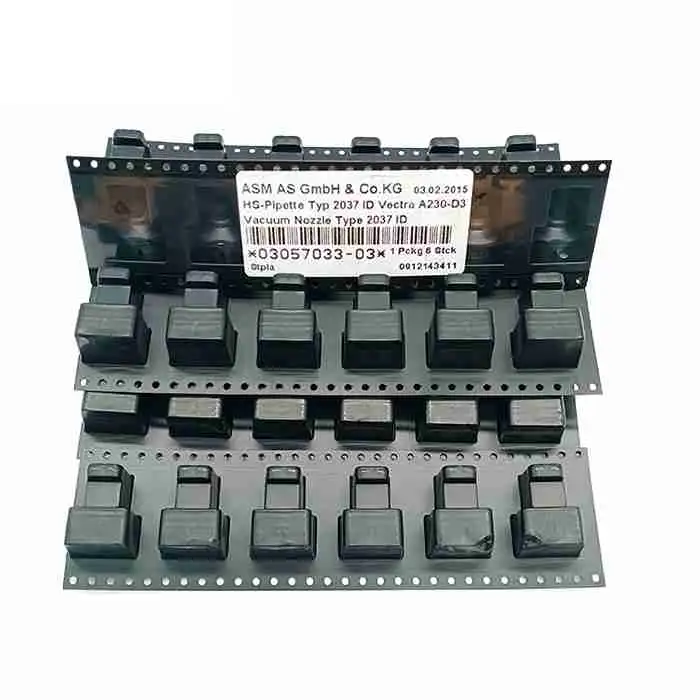
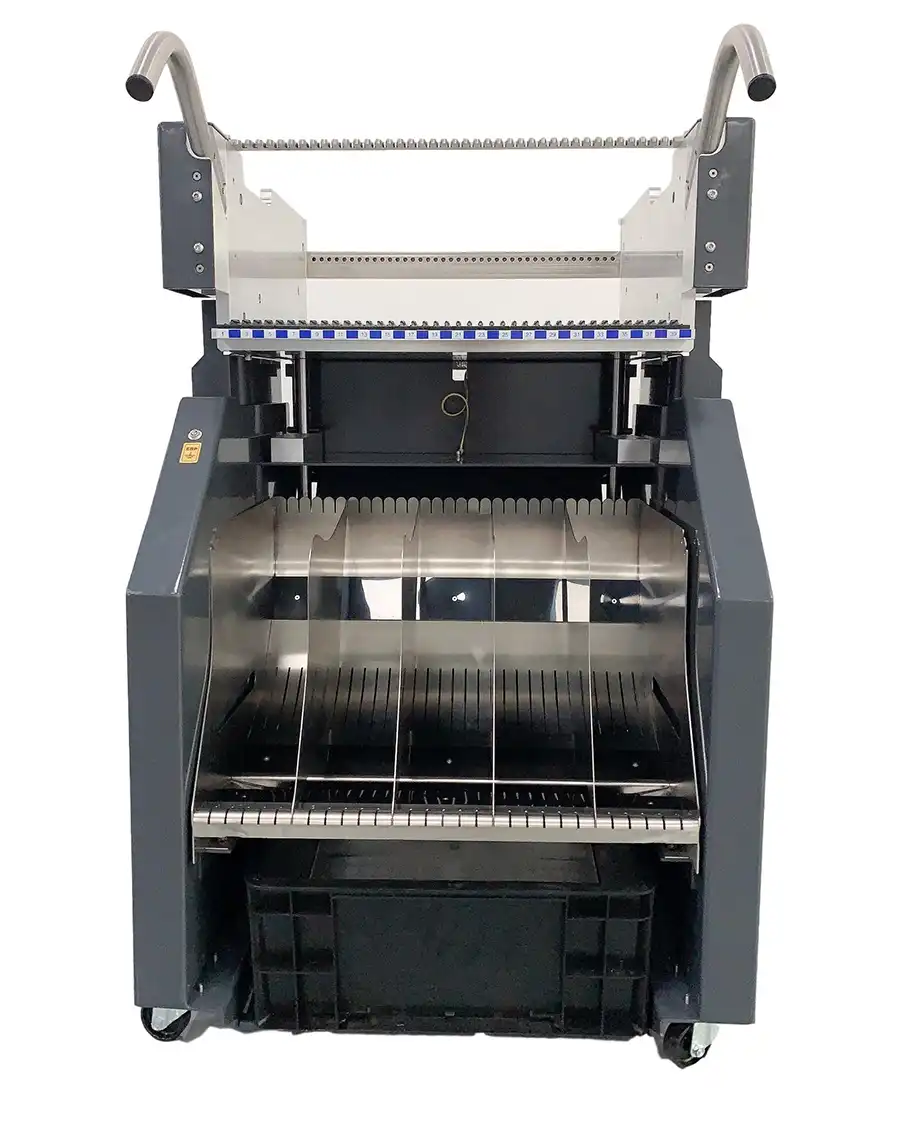
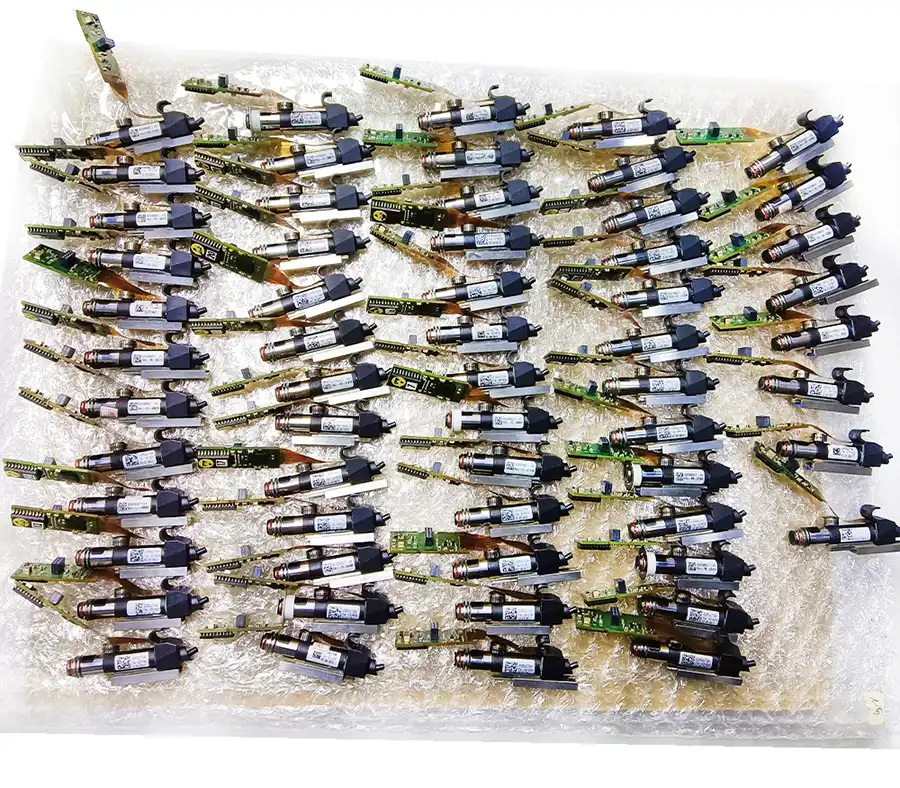
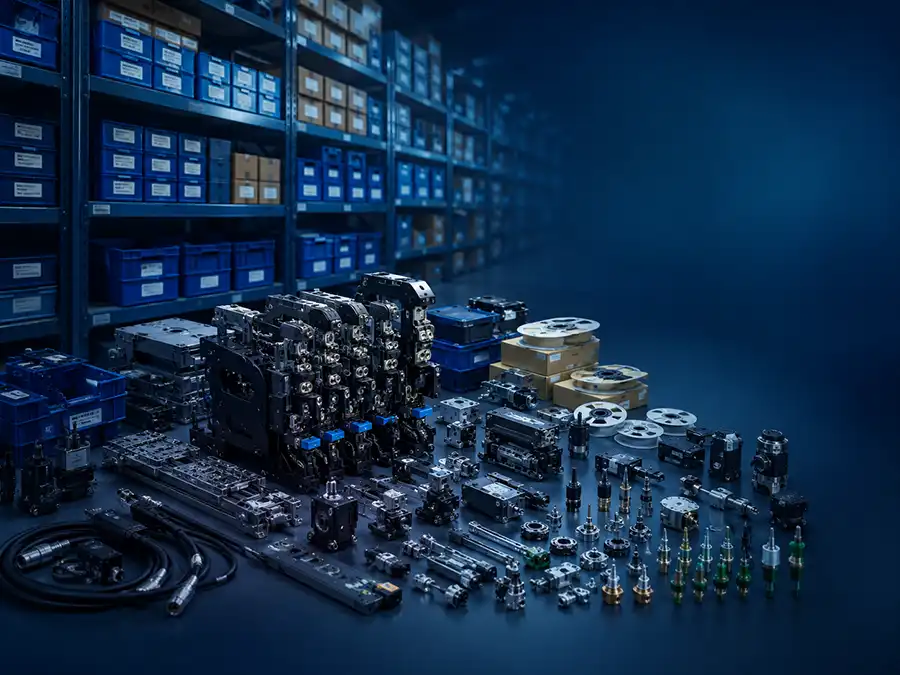
To order a SIPLACE placement head part, identify the exact head variant and then locate the required item within its assembly documentation. Confirm whether the quotation covers a complete head, a subassembly, or an individual component. Check the revision, interfaces, included accessories, and installation or calibration requirements before purchase.
“Placement head assembly” can mean very different things on a quotation. One offer may show a complete head with its camera and connections. Another may cover a mechanical assembly that still needs components transferred from the original unit. Comparing those offers by price alone leaves the most important difference unresolved.
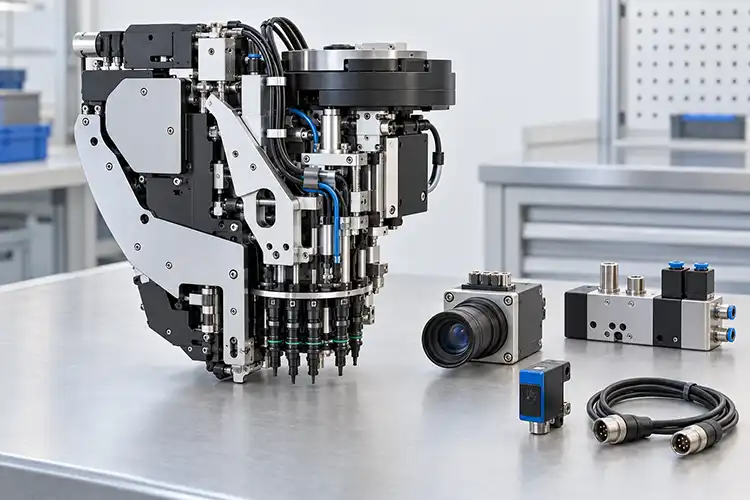
Establish the head variant before naming the spare part
Record the head designation from the installed hardware and relevant documentation. Preserve every letter and number. CP20, CPP, and TWIN are useful family names, but a broad name cannot establish that every internal part is shared across versions.
Add the machine model, serial number, installation position, and any available head identification. Photograph the head label and the target subassembly together where practical. This connects a small item to its parent assembly and reduces confusion when several heads or machines are being serviced at once.
The function also matters. For example, ASMPT describes the TWIN head as handling large, heavy, and odd-shaped components, with sensing and camera equipment that form part of its configuration. Those details explain why an inquiry for a “head sensor” needs a more precise location and role.
Decide how much of the assembly needs replacing
A repair request might concern a vacuum generator, pressure control valve, drive, sensor, distributor board, or another internal component. Identify the serviceable assembly shown in the documentation rather than assuming the smallest visible piece is an independently orderable part.
Some quotations describe a complete service assembly because its internal components are not supplied separately through that channel. Others describe an individual replacement item. Ask for the supplied scope in writing and compare it with the work the technician plans to perform.
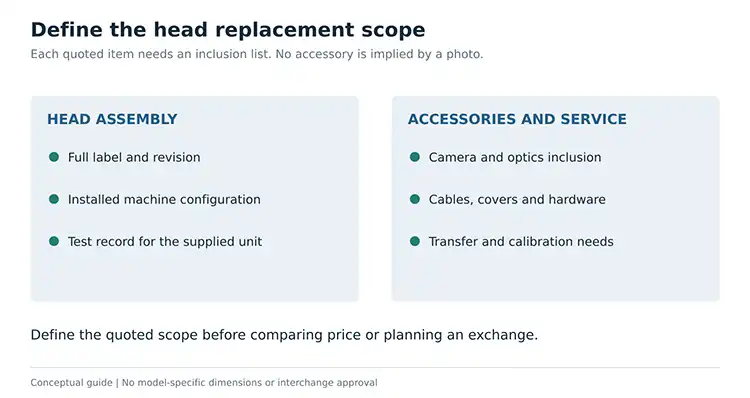
A complete head quotation needs an inclusion list
Confirm whether the offer includes cameras, valves, sensors, covers, connecting cables, mounting hardware, and other items needed for the intended configuration. The relevant list depends on the head; it should follow its actual assembly structure.
A seller's photograph may show a stand, transport fixture, or loose accessory beside the head. Identify which items ship with the order. Also check whether the original head must be returned under an exchange arrangement, since that changes both cost and the repair schedule.
Use the failure pattern to improve the inquiry
Suppose pickup errors appear repeatedly at one segment or position. Record that pattern, the machine messages, and the checks already completed. It can help a technician distinguish a local problem from a shared supply, control, or setup issue.
An alarm identifies what the control system observed. It does not always identify the failed physical part. A vacuum-related message, for instance, can require checks of the nozzle contact, pneumatic path, connections, and sensing before a replacement component is selected.
Keep the fault description factual. State when it happens, whether it affects one or several positions, and whether it began after maintenance or a configuration change. Avoid reporting a suspected cause as a confirmed diagnosis.
Revisions must be checked at the replacement boundary
The replacement boundary is the point where the supplied item connects to retained hardware. For a complete head, this includes its machine interfaces. For a valve or board inside the head, it includes neighboring mechanical, pneumatic, or electrical connections.
Compare that boundary against the proposed revision. A matching bracket does not resolve a changed connector or control requirement. Likewise, a component that shares a family name may need a different adjacent assembly.
Where a different part number is offered, request the documented substitution relationship and any associated kit. Ask whether the change requires configuration, parameter transfer, calibration, or another service step. The installation procedure should answer those questions before the replacement arrives.
Read a head test report for what it actually proves
A useful report identifies the tested unit and describes the fixture or machine, the operations checked, and the results. Ask which functions were evaluated and whether the report belongs to the unit being shipped.
Bench checks can provide valuable information. Their scope may differ from a machine-based evaluation of pickup, vision, rotation, placement, or other relevant functions. Neither should be described simply as “fully tested” without an explanation of the test coverage.
For a repaired head, request a description of the work completed and any unresolved findings. For a used head, ask about visible wear, missing items, and the availability of functional records. A clean exterior establishes little about internal condition.
Compare a complete replacement with a targeted repair
A complete head replacement may make sense when the affected functions are extensive, a documented compatible spare is available, or the repair schedule favors exchanging an assembly. A subassembly repair can be more practical when diagnosis has isolated a serviceable item and the remaining head has an acceptable condition record. Neither choice follows from the alarm name alone.
Compare the supplied scope, diagnostic confidence, installation work, calibration requirements, test coverage, and production schedule. Include the condition of retained components. A low-cost internal part may be a poor purchase if a second unresolved fault still prevents acceptance after the repair.
The ASM SIPLACE placement head and head-parts range separates complete head inquiries from requests for smaller head components. Use the assembly drawing reference in either case so the quotation follows the intended repair scope.
A practical quotation comparison
Consider two illustrative offers for a head replacement. Offer A covers a head assembly without a camera and requires transfer of supported equipment from the original head. Offer B includes a camera whose identity and condition still need checking. The second offer is not automatically complete for the target machine; the first is not automatically cheaper after installation work is included.
Ask both suppliers to state the included assembly numbers and the requirements for the installed configuration. Then compare the completed repair scope. This avoids paying for an accessory that cannot be retained or assuming that a missing accessory can be transferred without confirmation.
Use a specific head listing as a reference
A product page such as the 03126608 SpeedStar CP20P2 placement head gives procurement a defined head identity to discuss. It should not be treated as evidence that every machine fitted with another CP20-family head accepts the same assembly.
Copy the offered unit's full label into the comparison record. Confirm the parent machine, interface, camera requirement, and relevant configuration through the appropriate service reference. Where the listing name omits a suffix, request the label on the unit being offered.
Write a receiving checklist around the supplied assembly
Check on receipt | Evidence to retain |
Unit identity | Full head label, revision, serial number where present |
Included hardware | Comparison with the agreed inclusion list |
Connections and mounting | Clear photographs of interfaces and any transport damage |
Condition claim | Repair description or test record associated with the supplied unit |
Installation requirements | Applicable service instructions and configuration notes |
Exchange obligations | Return scope, deadline, and acceptance terms if agreed |
Avoid removing protective fixtures or transport restraints until the relevant handling procedure is understood. A missing cover and a damaged connector are different receiving findings; describe each precisely and keep them separate from any later functional observations.
Keep exchange terms attached to the technical decision
For a head supplied on exchange, clarify which original assembly must be returned and which accessories stay with the buyer. Record any core deposit, return timing, and exclusions in the order terms. A technician needs that information before transferring cameras, cables, or other retained parts.
If the old assembly must remain available for diagnosis or as a source of an approved retained component, resolve that schedule before accepting an exchange deadline. A commercial condition can otherwise interfere with a technically sound installation plan.
Preserve a usable history for the next head repair
After acceptance, connect the head serial or unit identity with the machine record and the test results. Record any transferred components individually. If the head later moves to another machine, its original acceptance record does not automatically establish the new configuration.
For uncertain labels or inconsistent previous orders, the SMT part identification checklist helps assemble the missing context. When the technical scope is clear, send the head details for a parts inquiry with the inclusion list rather than requesting a price for a broad family name.
Plan the installation before the purchase closes
Confirm who will install the assembly and which procedure governs the work. Record the required setup, calibration, and acceptance checks. Preserve relevant machine parameters and records through the approved service process before changing hardware.
After installation, machine recognition is only one observation. The service procedure may also call for checks of sensing, motion, nozzle changing, or placement performance. Document the actual acceptance results and retain the original and replacement identities in the maintenance record.
We encourage buyers to send the head label and a marked photograph of the requested component together. That allows the discussion to focus on the exact supply boundary, especially when the budget permits a subassembly repair but not a complete head replacement.
Does a head from the same machine model guarantee compatibility
No. Compare the head variant, machine configuration, revision, interfaces, and documented support. Two machines with the same model designation can have different installed options or service histories.
Is a rebuilt placement head equivalent to a new one
“Rebuilt” describes a condition claim whose scope should be explained. Ask what was renewed, what remained in service, and how the assembly was evaluated. Compare those records and the agreed warranty terms with the requirements of the production line.