
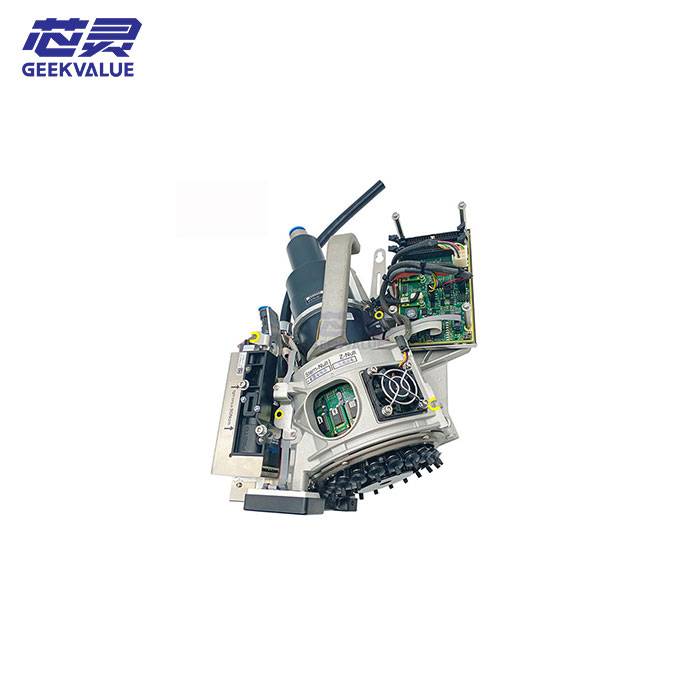
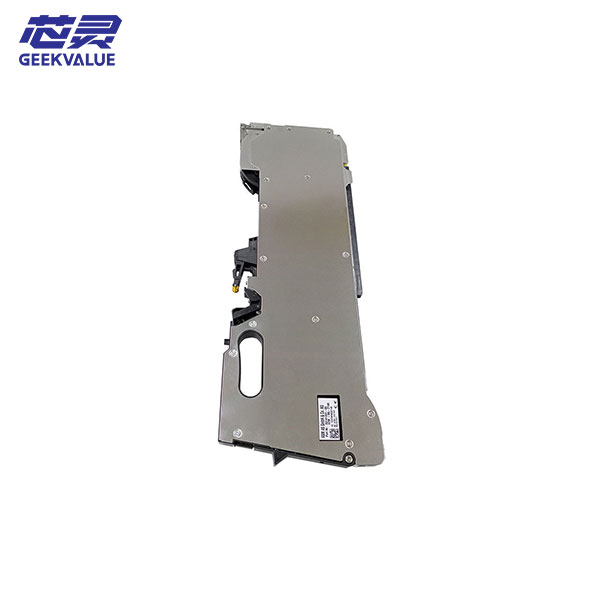
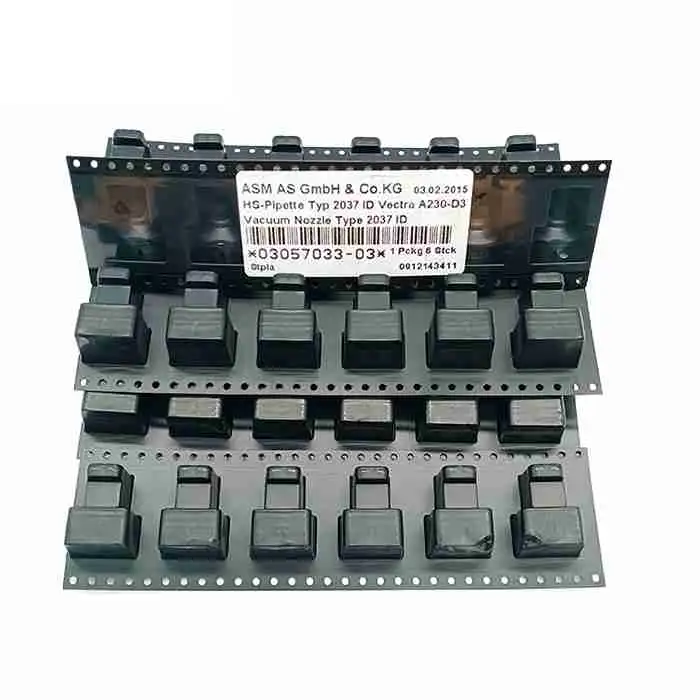
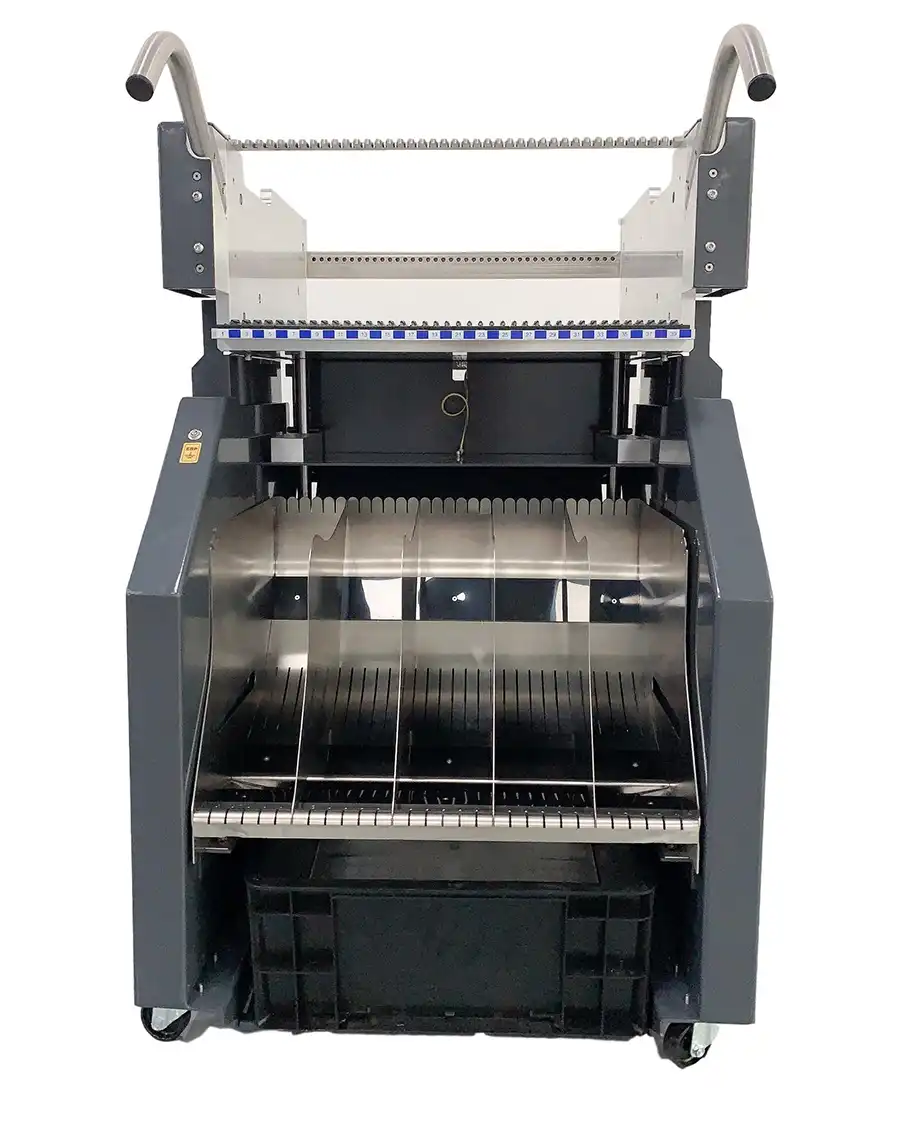
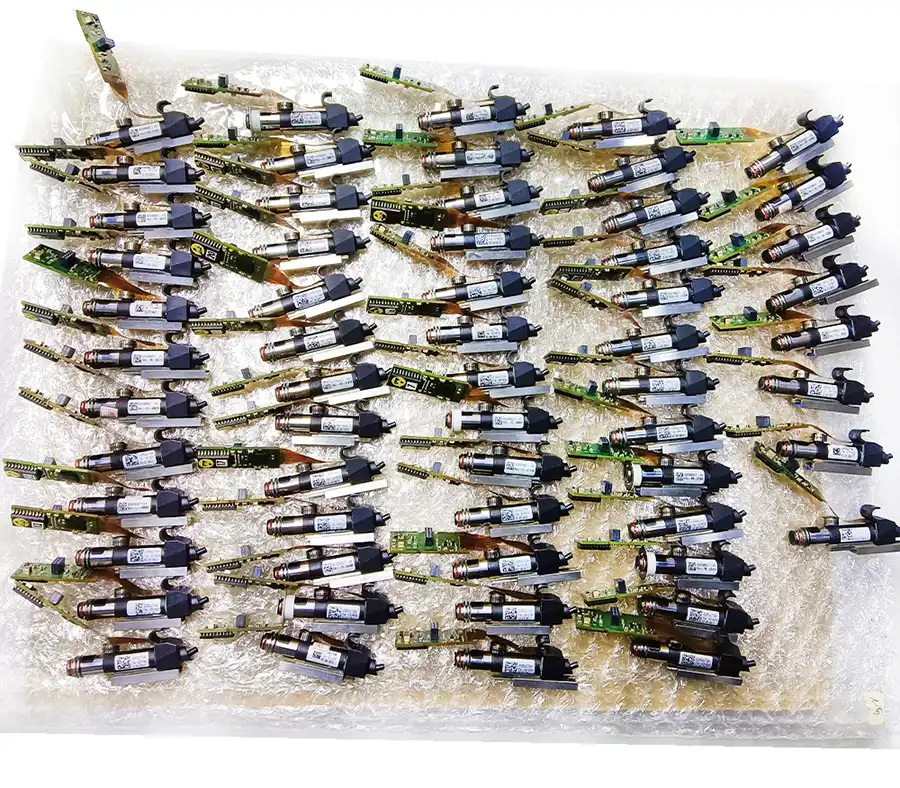
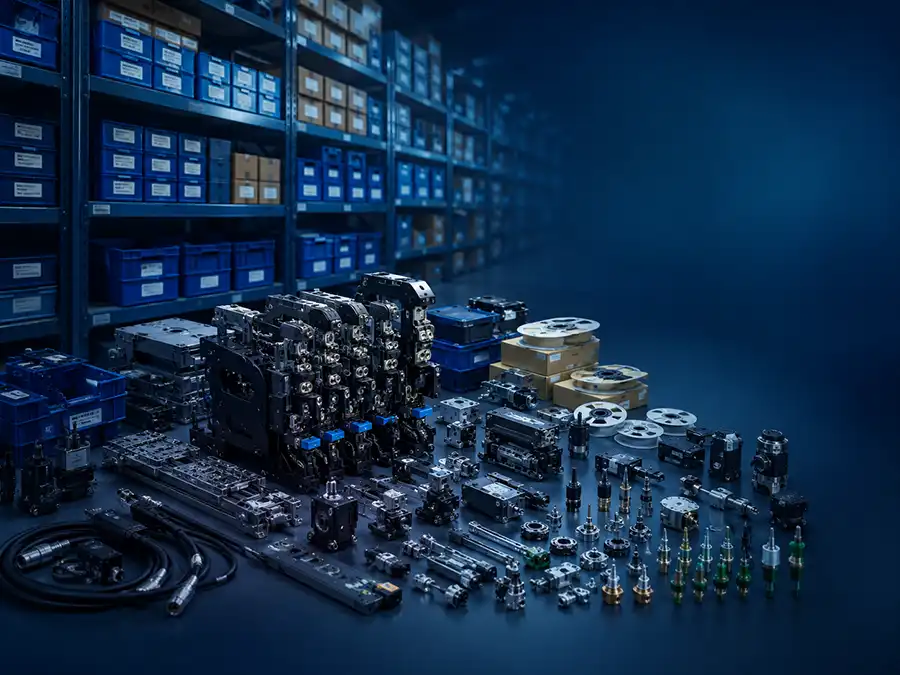
A SIPLACE X4 S is not defined only by its four gantries. The installed placement heads determine what the machine can actually place, how fast it runs, and whether it fits your product mix. Two X4 S machines with the same model name can have different published output, different component capabilities, and different commercial value — because the heads installed are different.
This guide compares CP20, CPP and TWIN by production role, then shows how head combinations affect published output and how to verify the heads installed on a used machine.
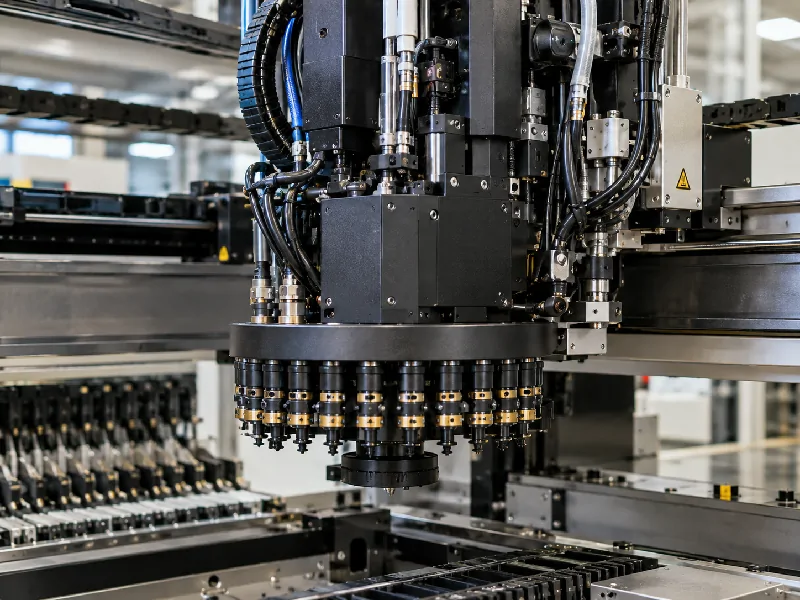
Why the Installed Head Defines Used SIPLACE Capability
Gantry count tells you how many heads a machine can carry. It does not tell you which heads are installed.
The SIPLACE X-Series S platform supports multiple placement head types, and different combinations produce different published performance. A machine configured with four high-speed heads will publish different IPC and benchmark values than the same model configured with a mix of high-speed and flexible heads. Head package must be treated as a primary specification, not a secondary detail.
On a used machine, the installed head package directly affects both production capability and replacement exposure. A configuration that does not match your product mix may require additional head changes or reconfiguration after purchase.
For the full model family, see the ASM SIPLACE X-Series S overview.
CP20 vs CPP vs TWIN: Three Production Roles
The three heads are designed for three different tasks. They are not interchangeable, and they are not a simple hierarchy of better and worse.
CP20: Speed for High-Volume Small Components
CP20 is the throughput-oriented head in the group. Its 20-segment revolver is designed around rapid small-component placement.
Component range: 0201 metric to 8.2 × 8.2 mm, height up to 4 mm
Placement speed: up to 48,000 cph on SIPLACE TX; up to 52,500 cph on SIPLACE V
Precision: 25 µm @ 3σ
Placement force: 0.5 N to 4.5 N
Best suited to: high-volume small-component placement
Source: ASMPT SIPLACE Placement Head CP20 product page.
CPP: Flexibility for Mixed and High-Mix Production
CPP trades part of CP20's pure chip speed for a much wider operating range. Its main advantage is the ability to switch placement modes through software rather than a physical head change.
Component range: 01005 to 50 × 40 mm
Component height: up to 15.5 mm
Placement speed: up to 25,500 cph
Maximum placement force: up to 15 N
Best suited to: mixed-component and high-mix production
Source: ASMPT SIPLACE Placement Head CPP product page.
TWIN: Size and Force for Large and Odd-Form Components
TWIN covers the large, heavy and high-force components that define the upper end of the placement range. It can use either a nozzle or a gripper.
Component range: 0201 to 200 × 125 mm, height up to 50 mm
Component weight: up to 300 g
Placement force: precisely adjustable up to 100 N
Design: twin-head with fine-pitch camera, vacuum sensor, force sensor, nozzle changer, PCB warpage detection
Best suited to: large, heavy, high-force or odd-form components
Source: SIPLACE TwinStar technical specifications.
Which Head Fits Your Product Mix?
The decision is not which head is best in isolation. It is which head or head combination fits the component range, force requirements, and throughput target of your production mix.
| Production requirement | Typical head choice | Why |
|---|---|---|
| High-volume 0402 / 0201 chip placement | CP20 | Highest throughput for small components |
| EMS with frequent product changeover | CPP | Automatic mode switching between collect-and-place, pick-and-place and mixed |
| Connectors, BGAs, odd-form components | TWIN | High force up to 100 N and large component capability |
| Server board with mixed BOM | CP20 + CPP or CP20 + TWIN | Balance speed and flexibility, or speed and large-component capability |
In practice, mixed-head configurations are useful when one product requires both high chip throughput and a wider component range. A stable chip-heavy program may need only CP20, while mixed assemblies may justify adding CPP or TWIN capability.
Head choice is also machine-specific. Do not assume that every CP20, CPP or TWIN variant can be installed on every SIPLACE generation. Verify machine generation, software and head compatibility before planning a head change.
How Head Combination Changes Published Output
The same machine model produces different published output when the head mix changes. This is the clearest evidence that model name alone does not define machine capability.
Published example (2021 X-Series S specification):
| Configuration | IPC value | Benchmark value |
|---|---|---|
| X4 S: four C&P20 P2 heads | 130,000 | 150,000 |
| X4 S: two C&P20 P2 + two CPP_L | 102,400 | 119,000 |
| X4i S: four C&P20 P2 heads | 146,000 | 172,000 |
| X4i S: two C&P20 P2 + two CPP_L | 112,950 | 133,000 |
Source: ASM SIPLACE X-Series S specification, 2021 edition.
What the numbers mean for a buyer:
| Configuration | Buyer consideration |
|---|---|
| Four CP20 | Maximum chip throughput. Limited large-component capability. Best for stable, high-volume chip products. |
| CP20 + CPP | Balance of speed and flexibility. Higher mix capability. The CPP can switch modes to handle components that CP20 alone cannot place. |
| CP20 + TWIN | Large-component capability. Adding a TWIN-type head trades part of the machine's pure chip-placement capacity for large-component capability. |
For the full machine configuration decision, see the X-Series S configuration guide.
SpeedStar, MultiStar and TwinStar Explained
SIPLACE documentation from different generations uses different names for related head families. A seller may list a machine as having “SpeedStar” heads while a service manual refers to the same family as “CP20.”
| Documentation term | Related head family | Buyer should verify |
|---|---|---|
| SpeedStar / C&P20 P2 | CP20 family | Exact variant, label, part number |
| MultiStar / CPP | CPP family | Exact CPP version |
| TwinStar / TH | TWIN / TH family | Exact variant and capability (Twin, Twin HF, Twin VHF) |
These names help you identify the head family. They do not replace physical nameplate verification. Within each family there are variants (P1, P2, CPP_L, CPP_H, TH, HF, VHF) with different specifications. The label on the installed head is the authoritative source for what is actually on the machine.
How to Verify Installed Heads on a Used Machine
Head condition and identity must be verified, not assumed from the model name or the sales description.
Identity
Machine-wide photo showing all gantry positions. Confirm that the machine has the number of gantries stated in the listing.
Installed head count. A four-gantry machine may not have four heads installed.
Head label and part number for each installed head.
Condition
Close-up photo of each installed head, showing head type and visible wear.
Nozzle interface condition. Visible wear or damage at the nozzle interface affects placement reliability.
System confirmation
Software configuration screen showing how the machine software recognizes the installed head type.
Head verification record, if available. The SIPLACE Head Care Station can test CP20, CPP and TWIN heads offline for vacuum and placement circuit state, DP and Z axis bearing movement, bearing wear, component sensor, Z light barrier, positioning accuracy and nozzle seat check.
If the seller cannot provide head label information or a head verification record, the head condition is unverified. Factor that uncertainty into your decision.
A Head Care Station record verifies technical functions at the time of testing. It does not by itself prove that the head matches your BOM, guarantees remaining service life, or confirms compatibility with a different machine generation.
FAQ
What is the difference between CP20, CPP and TWIN?
CP20 prioritizes small-component speed, CPP prioritizes flexibility, and TWIN extends the machine into large, heavy and high-force components.
Can CPP replace CP20 for high-speed production?
Not as a direct throughput equivalent. CPP is capable of production, but it is not a direct substitute for CP20 in pure high-speed chip workload. CPP is used alongside CP20, not instead of it.
Does the head combination affect machine output?
Yes. Published X4 S data shows materially different IPC and benchmark values for all-CP20 and mixed CP20/CPP configurations. Compare the installed head package, not only the model name.
Can I upgrade the placement heads on a SIPLACE X machine?
Head changes require checking machine generation, software, camera, feeder configuration and head compatibility. Not all combinations are a simple swap. Confirm with the machine documentation and supplier before committing.
Is a SIPLACE X4 S with four CP20 heads always faster than one with CPP or TWIN?
No. CP20 optimizes chip speed. CPP and TWIN reduce pure chip throughput but expand component range. A mixed-head machine may be slower on chips but capable of placing components that a four-CP20 machine cannot handle.
How do I identify a SIPLACE head from a used machine listing?
Do not rely on the sales description alone. Check the physical head label, part number and service documentation on the machine itself.
What is the difference between SpeedStar and CP20?
They are related head-family terms used in different generations of SIPLACE documentation. Verify the physical head label and part number on the machine to confirm the exact generation and specification.
Does the placement head affect machine price?
Machines with different installed head packages can have different commercial value because the heads change component capability, throughput potential and replacement exposure. The specific value difference depends on the machine generation, head condition and market demand.
SIPLACE Placement Head Selection: Key Takeaways
The installed head package should be treated as a primary filter when evaluating a used SIPLACE machine — not as a secondary specification. The same model name can produce different component capability, throughput and commercial value depending on which heads are actually installed.
CP20, CPP and TWIN are three different production tools, not three tiers of the same head. CP20 is built around small-component throughput. CPP adds software-switchable flexibility across placement modes. TWIN extends the machine into large, heavy and high-force components.
How those heads are combined directly changes published output and the production role the machine can fill. All-CP20 maximizes chip speed but limits component range. A mixed configuration trades part of that chip throughput for wider coverage.
Head naming varies across documentation generations. SpeedStar, MultiStar and TwinStar point to head families, but the physical label and part number on the machine remain the only authoritative source.
The practical takeaway: start from your component mix, then work backward to the head configuration — not the other way around. A machine is not the right fit because of what it is called; it is the right fit because of what it can place.