
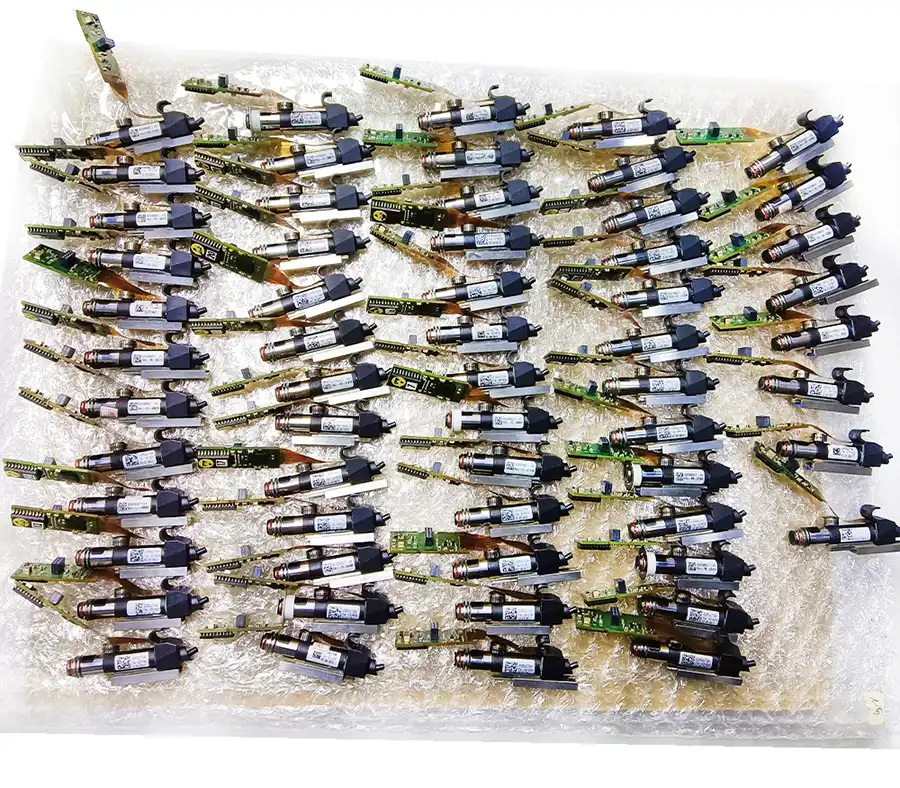
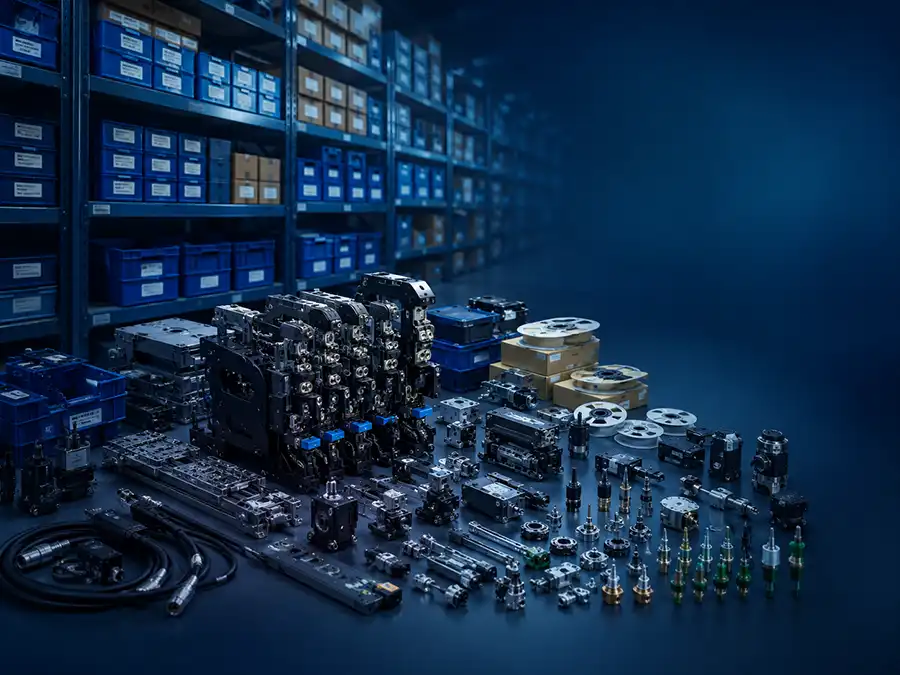
To identify an ASM SIPLACE spare part, record the complete part number, including any suffix, and match it to the machine configuration and installation position. Compare the label, interfaces, mounting dimensions, and revision. When a replacement number differs, request documented confirmation of the substitution before approving the order.
A purchasing request that says “SIPLACE motor” leaves several questions unanswered. Which mechanism does it drive? Does the request include the gearbox? Is the label on the motor itself or on the complete assembly? Sorting out those details early gives the supplier a much clearer basis for a quotation.
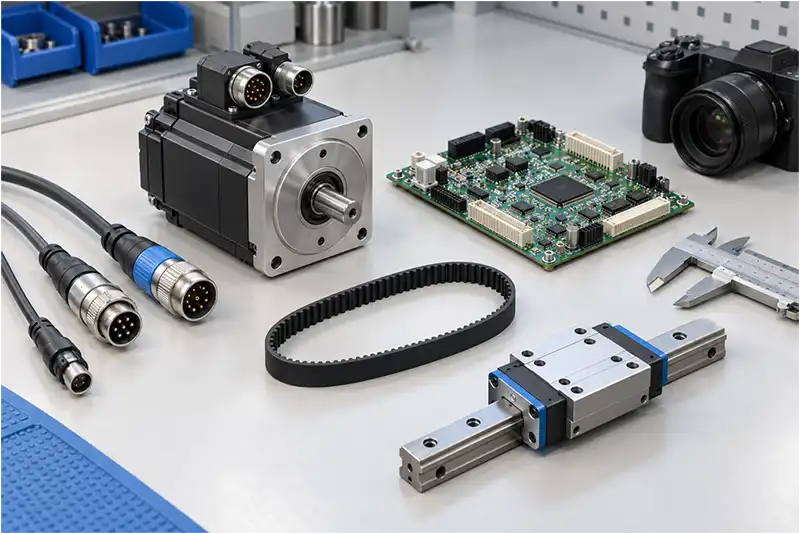
Start with the complete assembly number
Copy the number exactly as it appears on the installed item. Keep leading zeros, letters, spaces, and suffixes in the initial record. A purchasing system can store a normalized version as an additional field, but it should preserve the original label text and photograph.
A single assembly may carry several identifiers. The motor manufacturer can have one number, the SIPLACE assembly another, and the cable a third. A circuit board may show a bare-board marking as well as a label identifying its populated assembly. Those numbers describe different things and should not be merged into one assumed ordering code.
Write down where each number appears. “Adhesive label on complete drive assembly” is more useful than an unexplained string copied from a housing. If two labels disagree, send photographs of both and ask which identifier controls the supplied scope.
What a revision suffix can and cannot tell you
A suffix identifies a distinction within the manufacturer's numbering system. Its meaning must come from the relevant documentation. Do not assume that a higher suffix is interchangeable with every earlier version, or that a suffix always represents a minor change.
Where a supplier proposes a replacement number, ask whether it directly replaces the installed part or needs a kit, software change, adapter, or another associated component. Record the direction of substitution as well. Approval to replace an older assembly with a newer one does not automatically establish the reverse.
Record the machine as it is configured today
The machine family narrows the investigation, but the installed configuration determines the next checks. Record the full model from the nameplate, the serial number, and the head or subsystem involved. Add the software version when it may affect electronic modules or intelligent assemblies.
A second-hand machine may have received upgrades during its service life. Its original delivery specification can therefore differ from the hardware now installed. Compare current labels with the machine documentation and available service records before treating an old parts list as definitive.
Describe the location in ordinary maintenance language: board transport drive, feeder interface, component camera on a named head, or cable between two identified modules. If the machine distinguishes gantries, portals, or head positions, retain those designations exactly as shown in its documentation.
Use photographs to answer specific questions
One clear label photograph helps read the number. A wider view explains what the number belongs to. Both matter. Take the installed view before removal when access and the service procedure permit it.
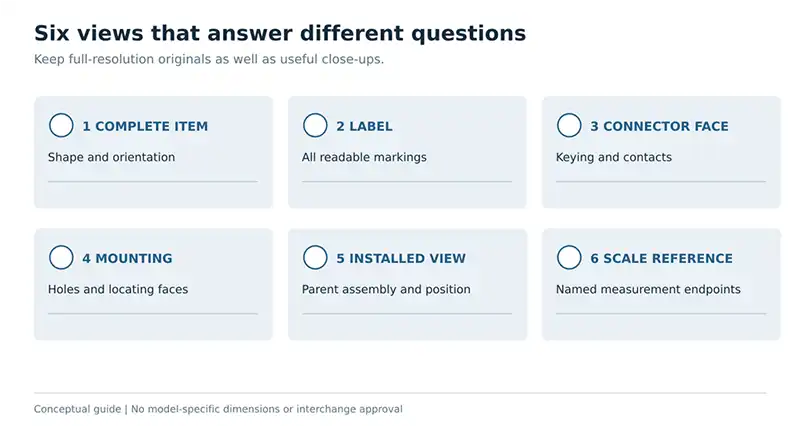
For an identification request, collect:
· The complete assembly with its orientation visible.
· A sharp, straight-on photograph of every identification label.
· Connector faces showing keying, contact arrangement, and locking features.
· Mounting points, shaft ends, hose ports, or other relevant interfaces.
· A view of the installation position and neighboring components.
· A scale reference beside any dimension that remains uncertain.
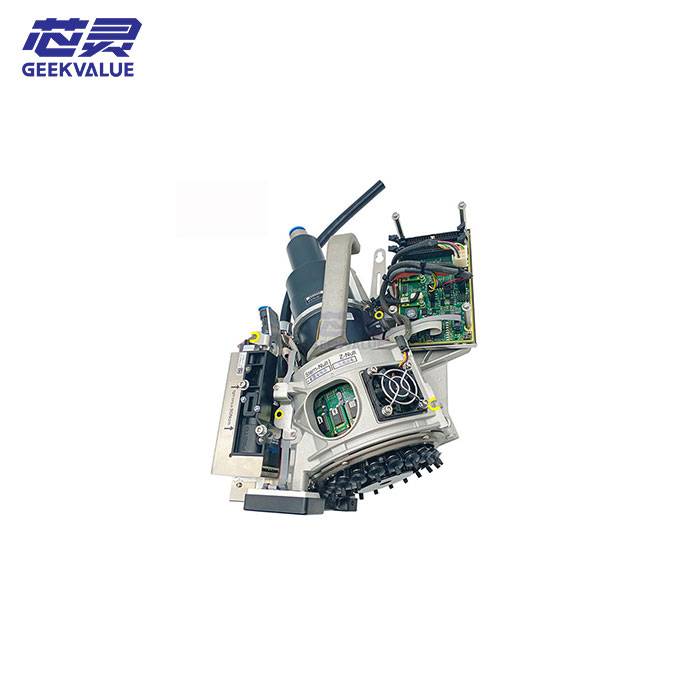
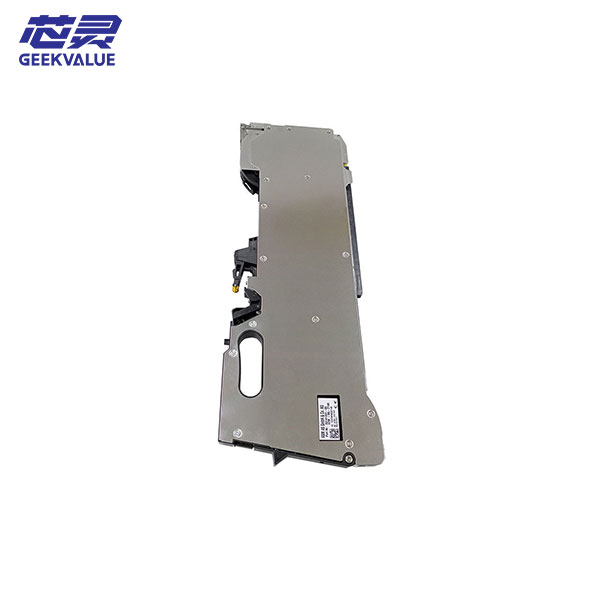
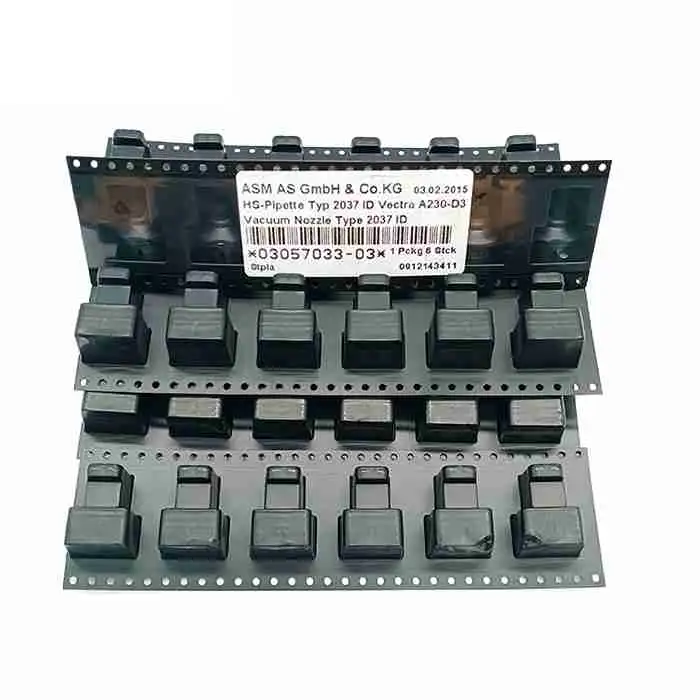
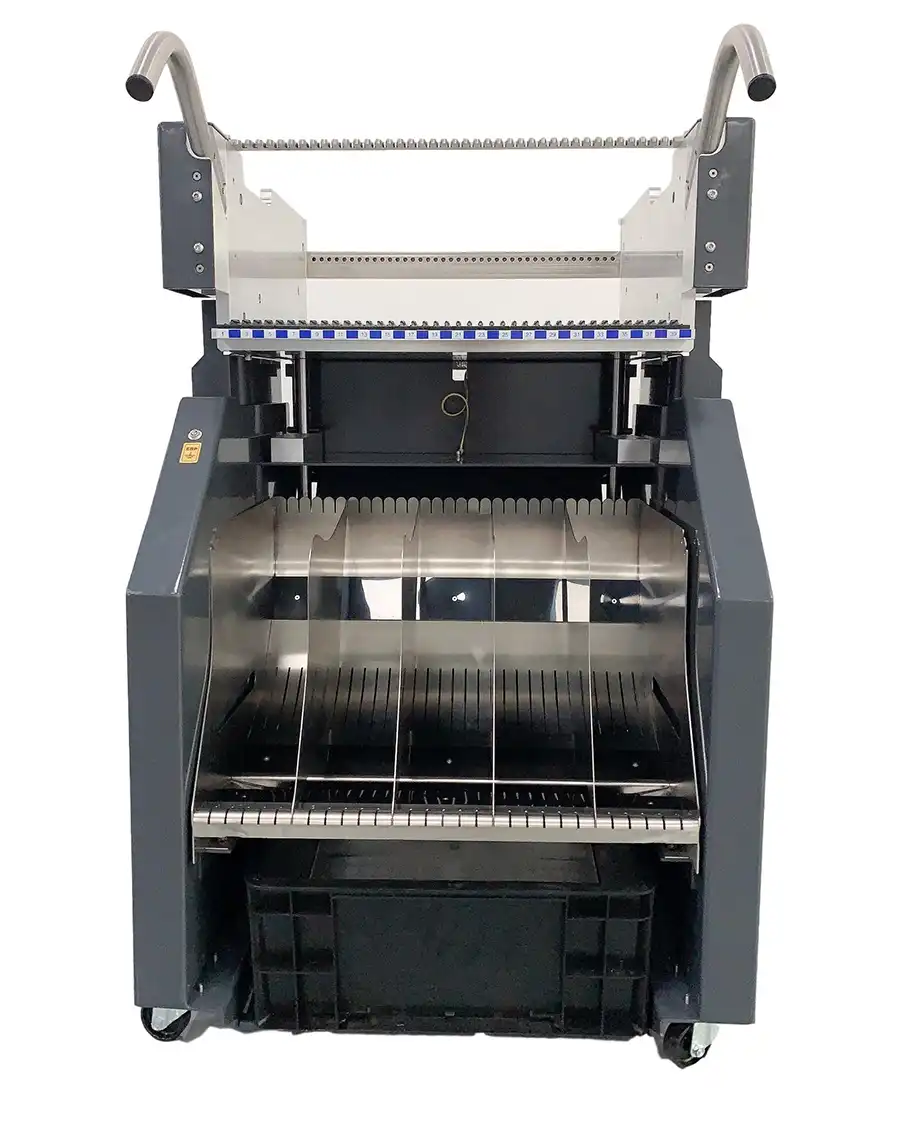
Use the actual item being requested. A catalog image can help explain the general component type, but it cannot establish the identity or condition of the unit on the machine. Keep photographs uncropped as well as providing close-ups, so a reviewer can connect each detail to the assembly.
Compare dimensions without losing the reference points
Measurements are useful when their endpoints are clear. Record hole center distances, shaft diameter, overall envelope, connector exit direction, and other dimensions that control fit. State the units and show the measurement location in a photograph or sketch.
For example, an overall motor length can change depending on whether the measurement includes a shaft, brake, or gearbox. A cable length can include or exclude its connectors. Two accurate measurements can look contradictory when they describe different endpoints.
Dimensions provide supporting evidence. They do not establish pin assignments, firmware support, optical performance, or internal function. A matching outline should never close an unresolved electrical or configuration question.
Separate identification from compatibility approval
An identification decision answers “What is this item?” A compatibility decision answers “Can the proposed replacement perform this role in this machine?” The second decision may require information that no external photograph can show.
The strongest reference is the machine-specific parts documentation or a documented replacement relationship from the manufacturer. Compare that information with the installed labels and interfaces. A supplier's written confirmation should identify the proposed part number, the intended machine and position, and any conditions attached to installation.
If the evidence supports only a possible match, keep it marked as a candidate. That status is useful: it makes the remaining question visible before payment or shipment.
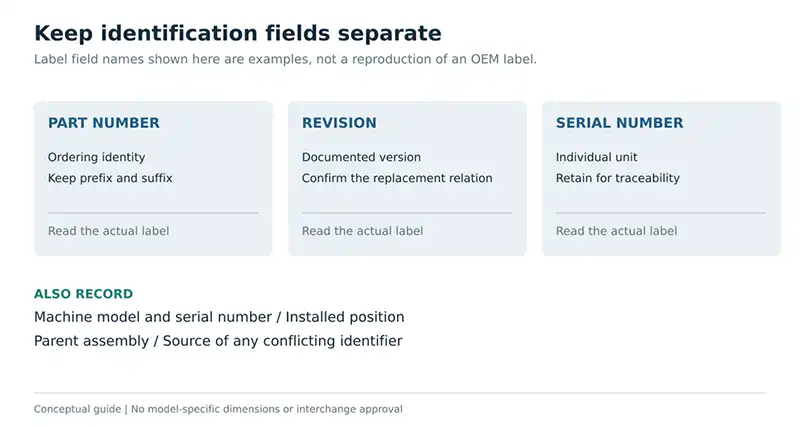
What to do when two identifiers disagree
An old purchase order may show one number while the installed label shows another. Start by checking whether the documents describe the same assembly level. A supplier stock code, a manufacturer's ordering number, and a serial number can all appear on one record without representing interchangeable parts.
Preserve both identifiers and the source of each. Compare the dated record with the machine's current configuration. If an earlier repair introduced a replacement assembly, obtain that repair record rather than treating the old purchase order as the final reference.
Packaging adds another possible mismatch. A returned or stored item may have been placed in a box from a different part. Photograph the box and the component separately, and resolve any discrepancy before the box label is copied into an order. The label attached to the hardware still needs to agree with the machine-specific reference.
Distinguish a revision from a serial number
A serial number identifies an individual unit. A revision identifies a documented version within a product or assembly record. A manufacturing date or batch code can provide traceability without defining compatibility. Keep these fields separate, even when the label places them close together.
Ask the reviewer to name the field being interpreted. That prevents an unreadable serial suffix from being mistaken for an essential ordering suffix, or a critical version code from being discarded as an incidental production marking.
Give the compatibility decision a written status
A practical purchasing record should state what has been confirmed and which questions remain. This is especially helpful when procurement, maintenance, and the supplier review different pieces of information.
Decision status | Evidence available | Next action |
Identity incomplete | Photograph or partial number only | Obtain missing labels, installation details, or parts documentation |
Identity established | Complete item identified against a reliable reference | Compare the offered item with the target machine requirements |
Replacement conditional | A documented substitution has specific conditions | Confirm the kit, configuration, or service steps in the order |
Approved for the stated machine | Identity and replacement requirements have been reviewed | Record the approval basis and agreed acceptance checks |
These are suggested record labels, not manufacturer certification categories. A supplier's confidence should not replace the information supporting the decision. Keep the approved machine and installation position attached to the record so an approval is not reused on another configuration without review.
The broader ASM SIPLACE spare parts range can help locate a candidate after the item has been classified. When the English part name or category remains unclear, the SMT spare parts finder provides a suitable route for submitting photographs and installation details.
Compatibility and condition need separate checks
A correct ordering number does not establish whether a unit is new, previously installed, repaired, or complete. Ask the supplier to describe the offered condition and to identify the actual unit or batch behind the quotation. A refurbished claim should explain the relevant work and test coverage.
An OEM label alone does not establish provenance or authorization. Where origin matters to the purchase, request traceability appropriate to the transaction and distinguish original manufacture from third-party replacement supply. Do not infer authenticity from a clean label or fresh packaging.
Close the identification record at receiving
Before the replacement enters stock, compare its labels and supplied accessories with the approved order. Keep any documented substitution alongside the original number. Photograph a discrepancy before labels or packaging are discarded.
After installation and acceptance, record which machine received the item, the installed revision, and the service reference. That turns an uncertain first inquiry into a traceable starting point for the next purchase. Related identification topics are collected in the ASM SMT spare parts guides.
Send an inquiry that can be checked
An effective request can read: “Please identify the complete replacement assembly for the attached part. The machine model and serial number are included. The label, installed position, connector faces, and mounting dimensions are shown. Please confirm the offered part number, revision, supplied accessories, condition, and any installation requirements.”
We welcome inquiries with this information because they make the requested item and the quoted item easier to compare. Where a label is incomplete, identify the missing characters openly rather than guessing them from a similar listing.
Can a SIPLACE part be identified without a readable label
Sometimes it can, through the machine serial number, assembly position, illustrated parts documentation, and interface details. A photograph alone may leave several variants possible. Keep the identification provisional until a suitable reference distinguishes them.
Does the same part number prove that a used unit will work
It helps establish identity, but it does not prove condition. Check the unit's revision, completeness, test evidence, and the machine requirements separately. A correct part can still be worn, damaged, or supplied without an essential accessory.