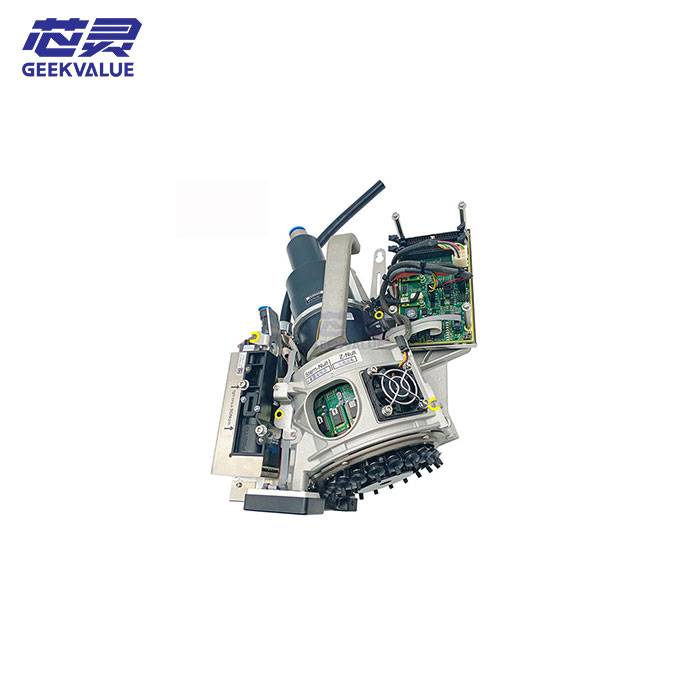
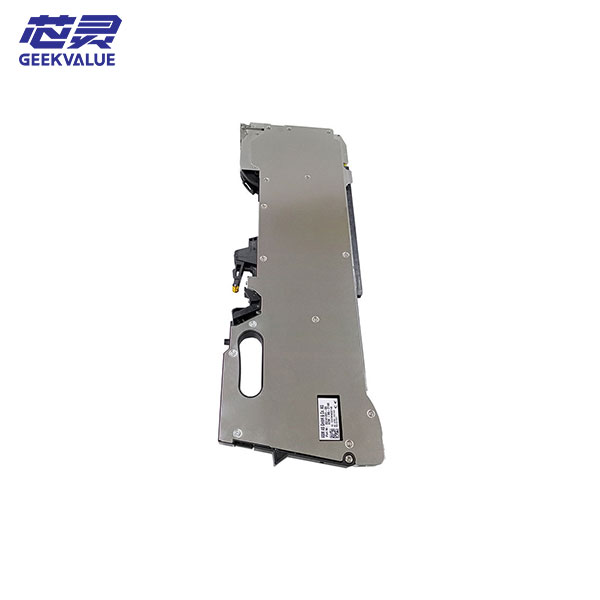
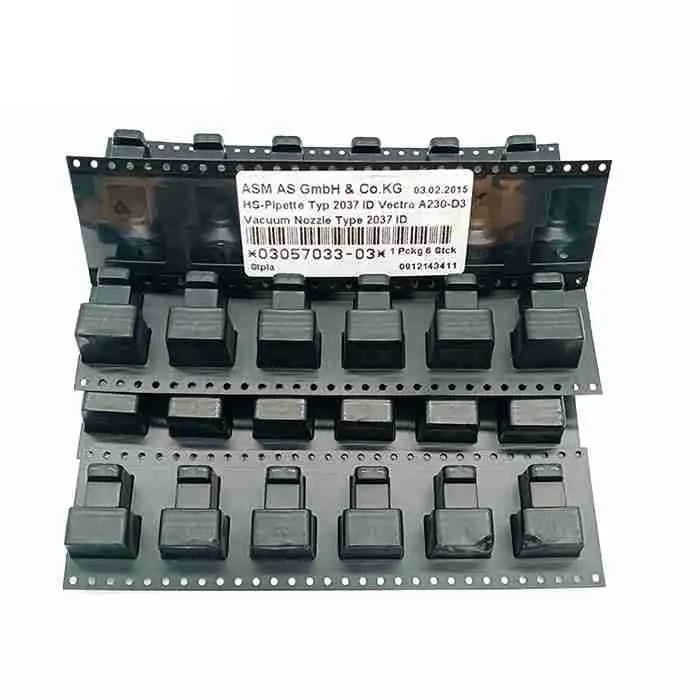
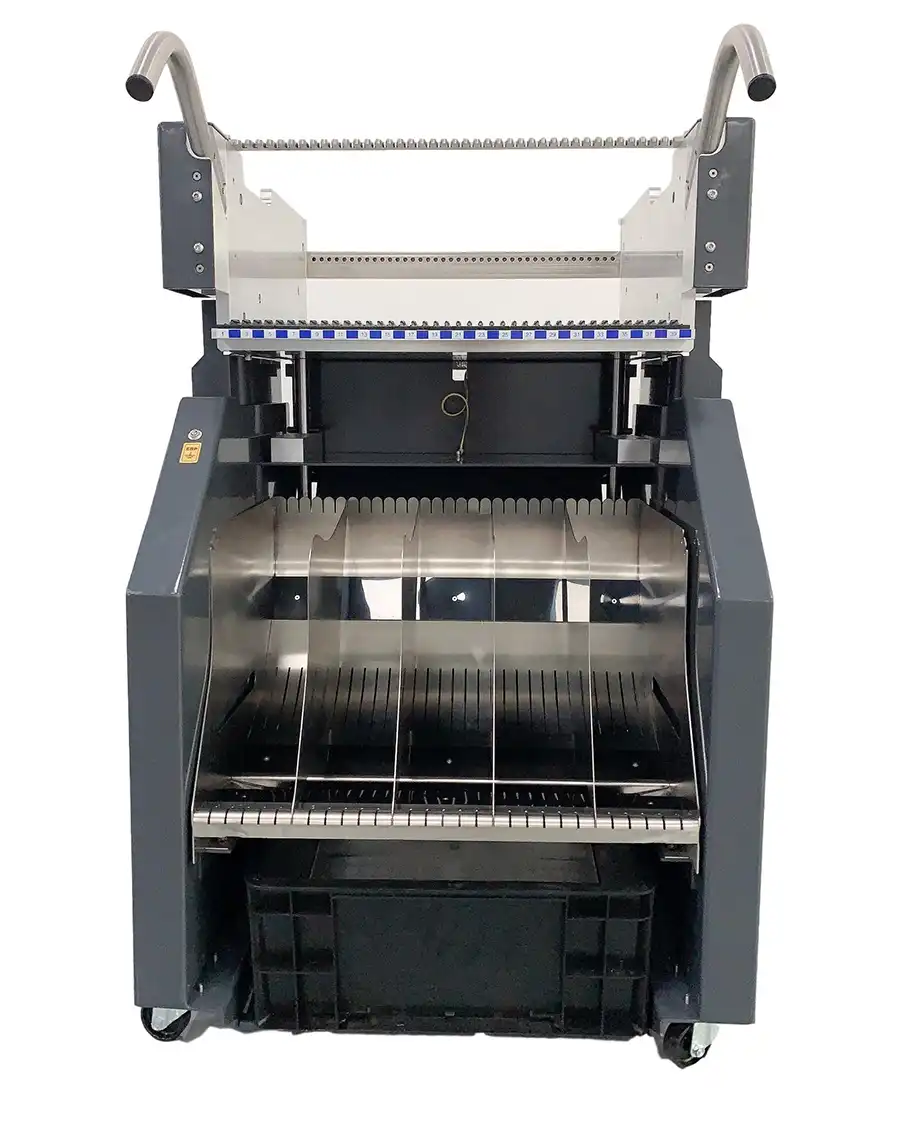
Used Siemens SIPLACE X4 four-gantry SMT placement machine for high-output and mixed-component production. Verify all four heads, feeders, conveyor and software before purchase.
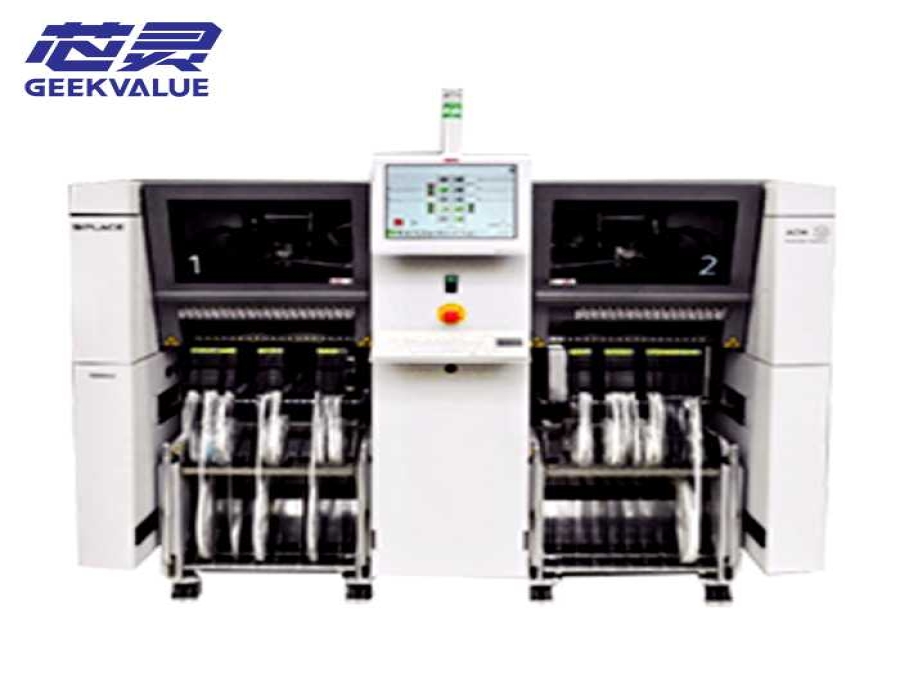
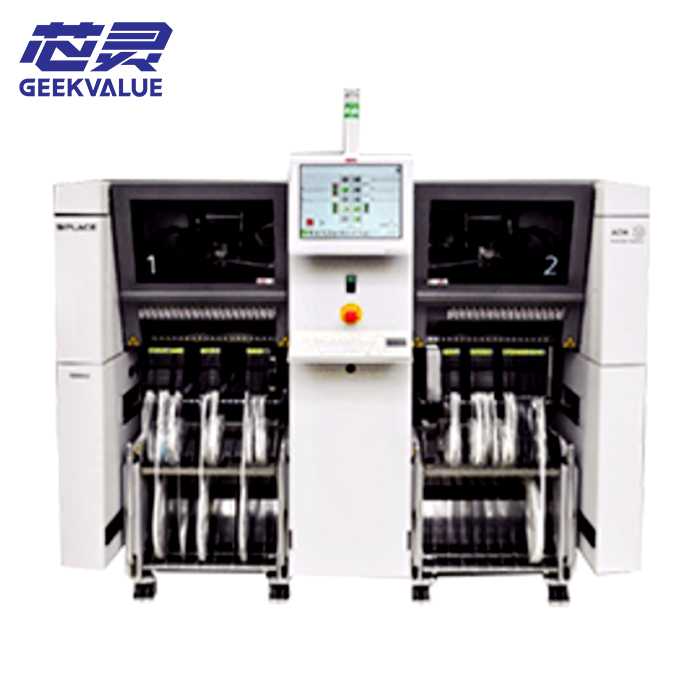
More gantries do not always mean more finished boards per hour. The Siemens SIPLACE X4 is a four-gantry modular SMT placement machine from the original SIPLACE X Series, designed to combine high placement capacity with configurable head roles for standard SMDs, ICs, fine-pitch and larger special components. Its value depends on whether the PCB program can make productive use of all four gantries rather than simply whether the machine carries the highest model number in the series.
An X4 equipped with four C&P20 heads has a published SIPLACE benchmark of up to 90,000 CPH, while mixed C&P20, C&P12, C&P6 and TwinHead configurations trade some headline speed for broader component coverage. The fourth gantry only creates production value when it shortens the actual board cycle, carries a useful additional component role, or removes a placement bottleneck that an X2 or X3 cannot solve.
This is also where the used-X4 economics become more specific. For a factory already operating compatible X-Series equipment, a correctly configured used X4 can add four-gantry placement capacity without forcing an immediate platform change. Where compatibility is confirmed, existing operating knowledge, programming practices, technician experience and production resources may continue to provide value. The investment is therefore concentrated on the missing placement capacity or head role rather than rebuilding parts of the line that are already working.
A suitable used X4 can also be relevant when additional capacity is needed within a limited project or demand window. If an appropriate machine is already available, can be inspected and matches the existing line, it may shorten the path to usable capacity compared with starting a complete new-equipment procurement cycle. For uncertain or seasonal demand, the lower capital commitment of a used machine can also reduce the factory’s exposure if the additional capacity is no longer required later.
The X4 is strongest when the PCB program has enough compatible placement work to keep four gantries productively loaded, or when four different head roles are genuinely useful within one machine. It is less attractive when an X2 or X3 already meets the required board cycle and component mix. In that case, the fourth gantry becomes additional capital without necessarily creating additional finished-board output.
| Parameter | Reference Specification |
|---|---|
| Machine Type | Four-gantry modular SMT placement machine |
| Gantry Configuration | 4 gantries across 2 placement areas |
| Placement Head Options | C&P20, C&P12, C&P6 and TwinHead in configuration-dependent combinations |
| Maximum IPC Rating | Up to 81,000 CPH with 4 × C&P20 heads |
| Maximum SIPLACE Benchmark | Up to 90,000 CPH with 4 × C&P20 heads |
| Theoretical Maximum | Up to 124,000 CPH under theoretical reference conditions |
| PCB Size | Approximately 50 × 50 mm to 450 × 535 mm in the standard single-conveyor reference configuration |
| Optional Long-Board Format | Up to approximately 610 × 535 mm with the required long-board equipment |
| Component Range | From small high-volume SMDs to fine-pitch, large, heavy and special components according to installed heads, cameras, nozzles and tooling |
| Feeder Capacity | Up to 160 positions for 8 mm SIPLACE X feeder modules with the applicable X changeover tables |
| Conveyor Mode | Single conveyor or flexible dual conveyor |
The 90,000 CPH benchmark and 81,000 CPH IPC rating apply to the four-C&P20 reference configuration. The 124,000 CPH value is theoretical and should not be treated as expected production output from an individual used X4. Different combinations of C&P20, C&P12, C&P6 and TwinHead can change both placement speed and component coverage substantially, and actual output also depends on program balance, feeder performance, conveyor timing and machine condition.
The X2, X3 and X4 share the same modular platform concept, so moving to the larger model only makes sense when another gantry solves a measurable production problem. The decision should start with board cycle, placement workload and component mix rather than assuming that the highest model number is automatically the better investment.
| Buying Factor | SIPLACE X2 | SIPLACE X3 | SIPLACE X4 |
|---|---|---|---|
| Placement Gantries | 2 | 3 | 4 |
| Maximum SIPLACE Benchmark | Up to 49,000 CPH | Up to 69,500 CPH | Up to 90,000 CPH |
| Maximum IPC Rating | Up to 43,400 CPH | Up to 62,200 CPH | Up to 81,000 CPH |
| Primary Buying Question | Can two gantries already meet the required board cycle and component roles? | Does a third gantry remove a real capacity or component-mix bottleneck? | Can the fourth gantry create measurable cycle-time improvement or useful additional component coverage? |
| Best Fit | Production where two head positions already cover the required workload | Lines that need another placement role or more capacity without moving to four gantries | High placement loads or mixed-head strategies that can productively use four gantries |
| Capital Logic | Avoid paying for gantry capacity the line does not need | Add another gantry only when it solves an identified bottleneck | Accept the larger investment only when the fourth gantry changes real production output or process coverage |
| Main Purchasing Risk | Leaving too little capacity margin for future production | Choosing an intermediate configuration that still does not remove the bottleneck | Paying for four-gantry capacity that the PCB program cannot fully use |
One of the most expensive mistakes when buying a used X4 is paying for four gantries before confirming that the board program can keep them all productively loaded. A second mistake is assuming that every X4 provides the same production role. A machine with four C&P20 heads is very different from one combining high-speed heads with C&P6 or TwinHead, and a mismatched head configuration can prevent the machine from delivering the capacity or component flexibility that justified the purchase.
The same applies to 01005 capability, long-board processing and special-component placement. The required cameras, nozzles, feeder tables, conveyor hardware, software and option packages must exist on the actual machine. A lower purchase price loses its advantage quickly if critical production capability has to be added or rebuilt after delivery.
For an existing X-Series factory, the strongest used-X4 business case is therefore not simply that it is the largest original X model. It is the ability to add useful four-gantry capacity while preserving more of an established production environment and limiting the capital committed to the expansion. If three gantries already achieve the required cycle and component coverage, a correctly configured X3 can be the more capital-efficient purchase.
Before price becomes the deciding factor, first confirm that the production plan genuinely needs a fourth gantry. Review the placement count per board, standard-SMD share, current board cycle, target cycle, workload distribution between heads and the cycle time of the surrounding equipment. Then verify the offered X4 itself through the installed head configuration, component tables, calibration status, conveyor, software and included feeder package. Configuration records, current photos, powered-on test footage and remote live inspection can be reviewed where available.
If you are not sure whether this product matches your machine, send us the model, label photo or old part picture for checking.