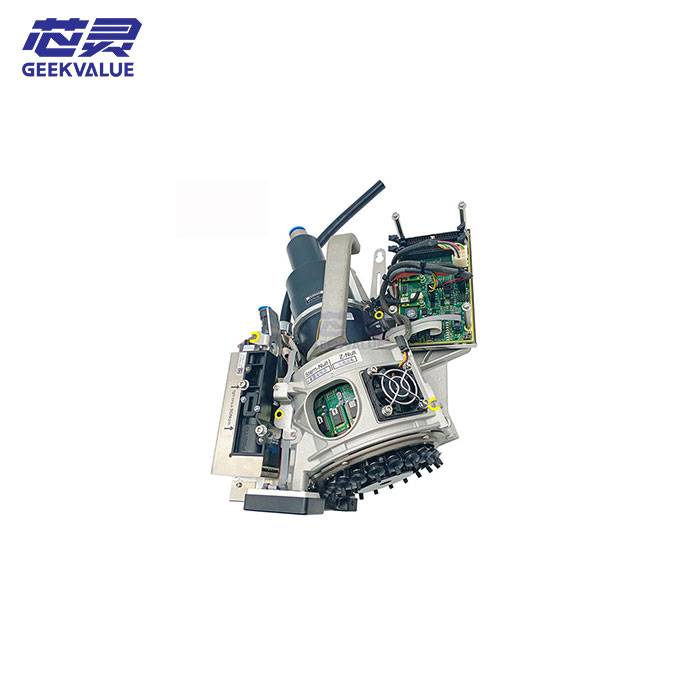
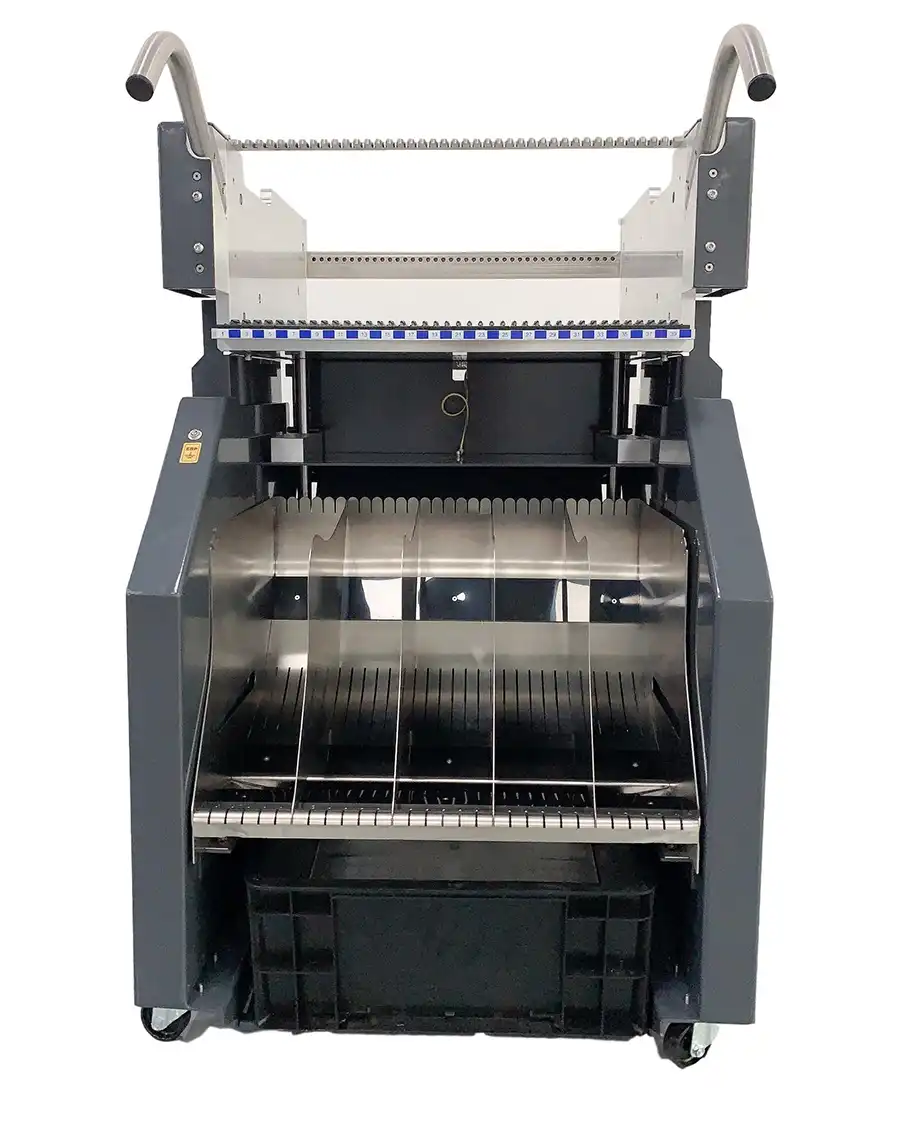
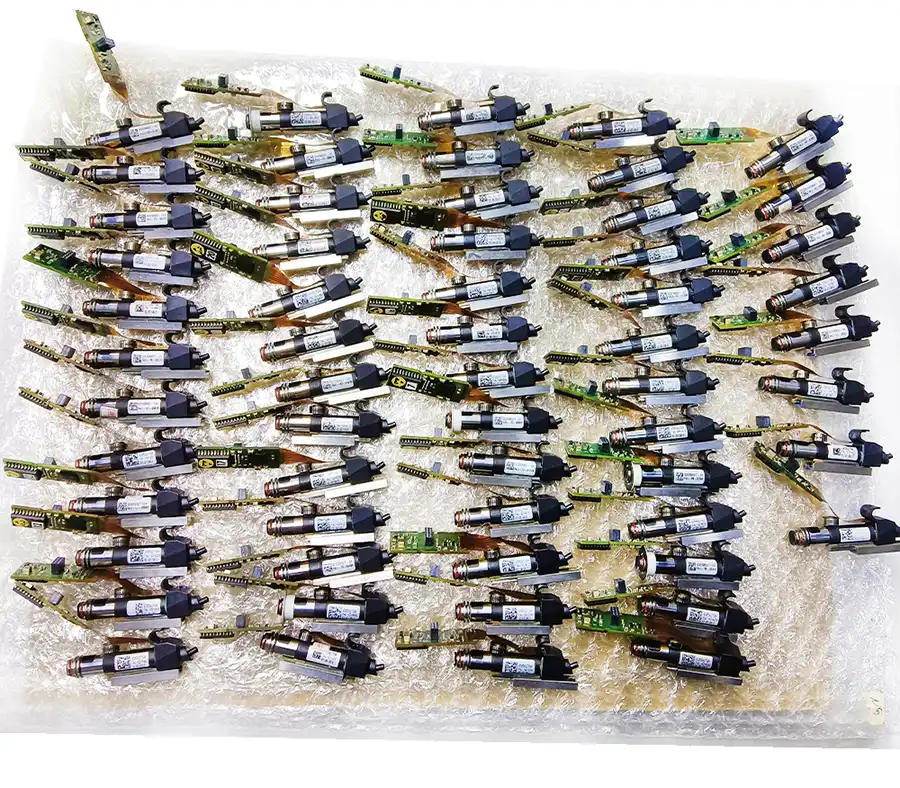
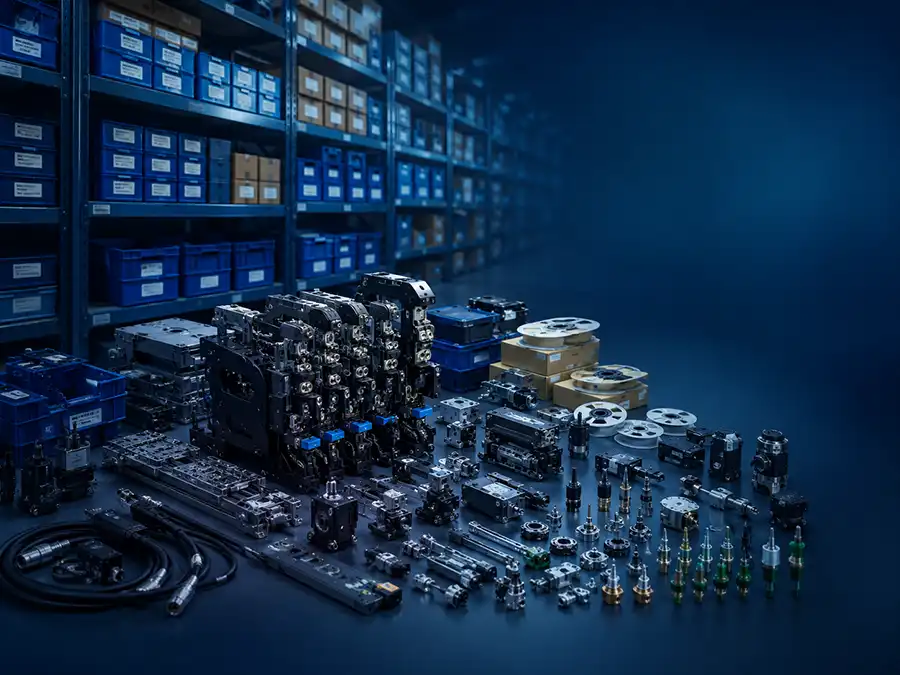
Used Siemens SIPLACE D4 four-gantry chip mounter with 66,000 CPH benchmark output, four C&P12 heads and up to 144 feeder tracks.
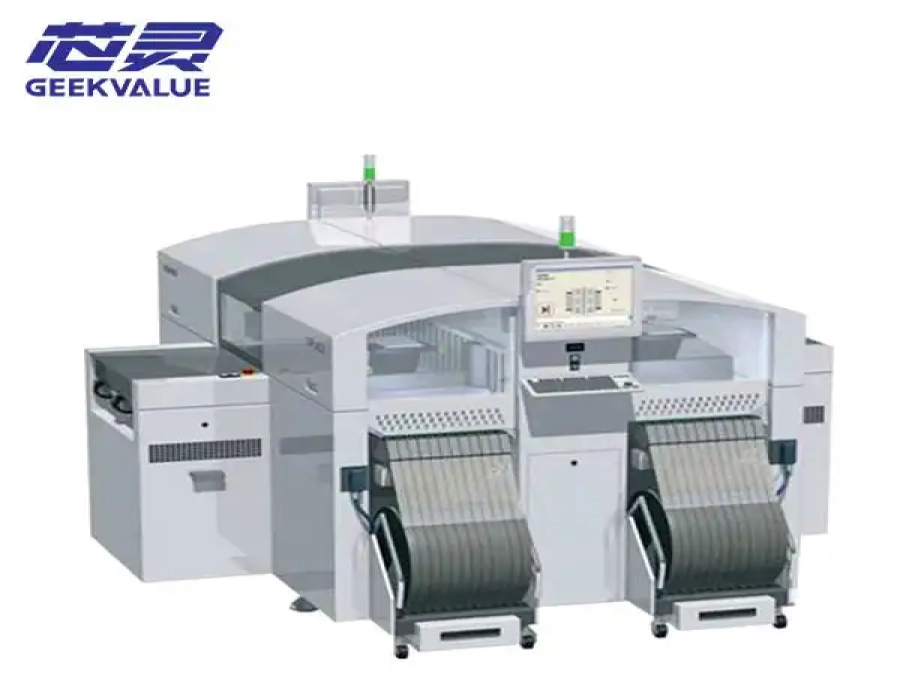
When standard SMD placement is the real bottleneck on an SMT line, adding another flexible machine does not necessarily improve finished-board output. GEEKVALUE supplies multiple used Siemens SIPLACE D4 machines with different conveyor, camera, feeder-table and software configurations. The D4 is a four-gantry high-speed chip mounter designed to concentrate placement capacity on the small and medium components that make up a large share of many PCB programs.
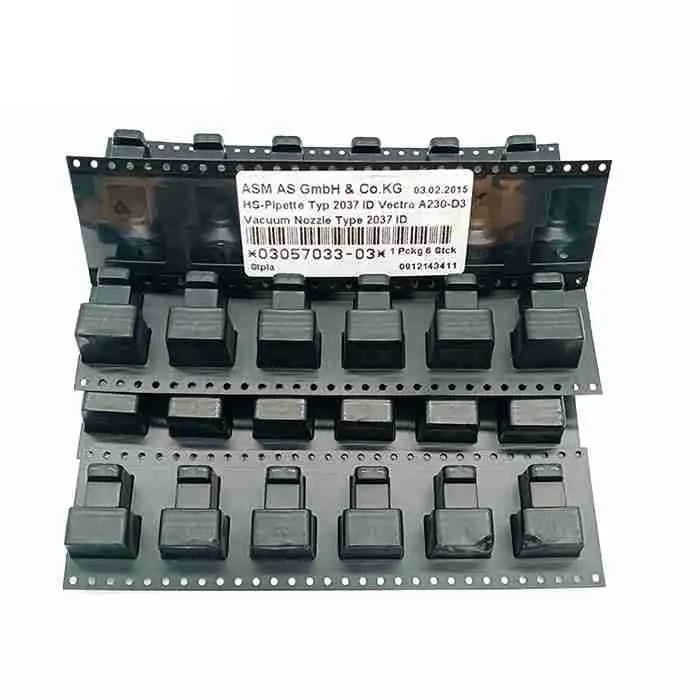
A typical high-output D4 uses four 12-nozzle Collect & Place heads. The original specification lists 57,000 CPH under IPC conditions and 66,000 CPH under the SIPLACE benchmark, while 81,500 CPH is the theoretical maximum. For production planning, the benchmark is more useful than the theoretical figure, but actual board output still depends on how evenly the placement program keeps all four gantries working.
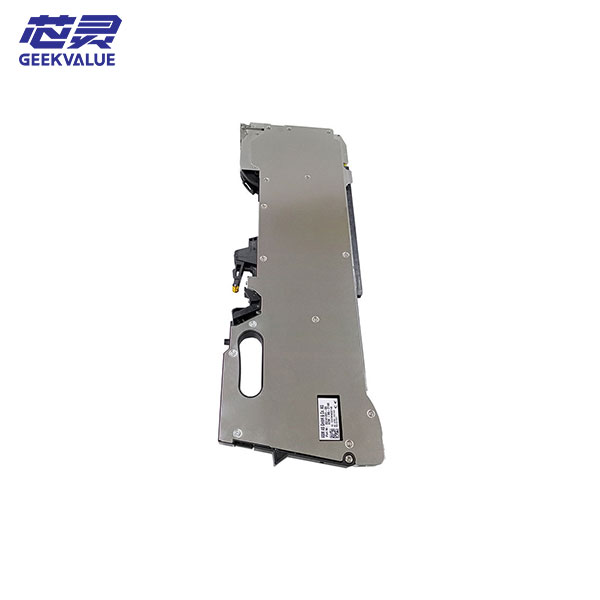
The machine also provides enough material capacity for component-dense PCBAs. With four component changeover tables and compatible 3 × 8 mm S feeder modules, the platform can provide up to 144 individual 8 mm tracks. Offline table preparation allows the next material setup to be prepared while the current product is still running, which can reduce production time lost during product changeover.
The D4 is best suited to volume production dominated by standard tape-fed SMDs and compatible IC packages. It is not the right standalone machine when a large share of the BOM consists of tall connectors, heavy parts or irregular components outside the C&P12 range; a more flexible machine such as the SIPLACE D3 may be needed for that work. Buyers can also review the complete SIPLACE D Series when balancing chip-placement capacity against component flexibility.
| Parameter | Reference Specification |
|---|---|
| Machine Type | Four-gantry high-speed SMT chip mounter |
| Gantries | 4 |
| Placement Heads | 4 × 12-nozzle Collect & Place heads |
| IPC Placement Rate | 57,000 CPH |
| SIPLACE Benchmark | 66,000 CPH |
| Theoretical Maximum | 81,500 CPH |
| Standard Component Range | Approximately 1.0 × 0.5 mm to 18.7 × 18.7 mm with the applicable standard camera configuration |
| Optional Small-Component Packages | 0201 and 01005 capability require the corresponding camera, nozzle, feeder and software package |
| Maximum Component Height | Approximately 6 mm |
| Placement Accuracy | Approximately ±50 µm at 3σ |
| Feeder Capacity | Up to 144 tracks with compatible 3 × 8 mm S feeder modules |
| Component Changeover Tables | Up to 4 |
| Maximum PCB Format | Up to approximately 610 × 508 mm with the required long- and wide-board options |
| PCB Thickness | Approximately 0.3–4.5 mm as standard |
| Maximum PCB Weight | Approximately 3 kg |
| Conveyor Options | Single conveyor or flexible dual conveyor |
The specifications above are OEM reference values. The actual throughput of a used D4 depends on gantry condition, head condition, calibration, feeder layout, PCB program and the balance of the complete SMT line.
| Production Condition | D4 Buying Value |
|---|---|
| Large placement count of standard SMDs | Four C&P12 heads can divide a high component load and shorten the placement section of the board cycle. |
| Placement is the current line bottleneck | Additional placement capacity can translate directly into higher finished-board output when downstream processes can keep up. |
| The four gantries can be balanced evenly | Similar workloads on each head reduce waiting time and make better use of the published machine capacity. |
| Another process already limits the line | More mounter speed may provide little improvement if printing, inspection, reflow or another placement stage remains slower. |
| The BOM contains many large or special components | The D4 should normally work with a flexible placement stage rather than being expected to complete the full PCB alone. |
For a used D4, the important question is not whether the machine can show four operating heads, but whether all four gantries can maintain stable pickup, vision correction and placement under a real production program. Powered-on testing and available condition records should be reviewed together with the OEM speed figures.
The D4 is a practical purchase when four C&P12 heads can stay busy on the actual product mix. In that situation, its four-gantry architecture and material capacity can provide useful production output without paying for flexible-placement capability the line does not need.
If you are not sure whether this product matches your machine, send us the model, label photo or old part picture for checking.